
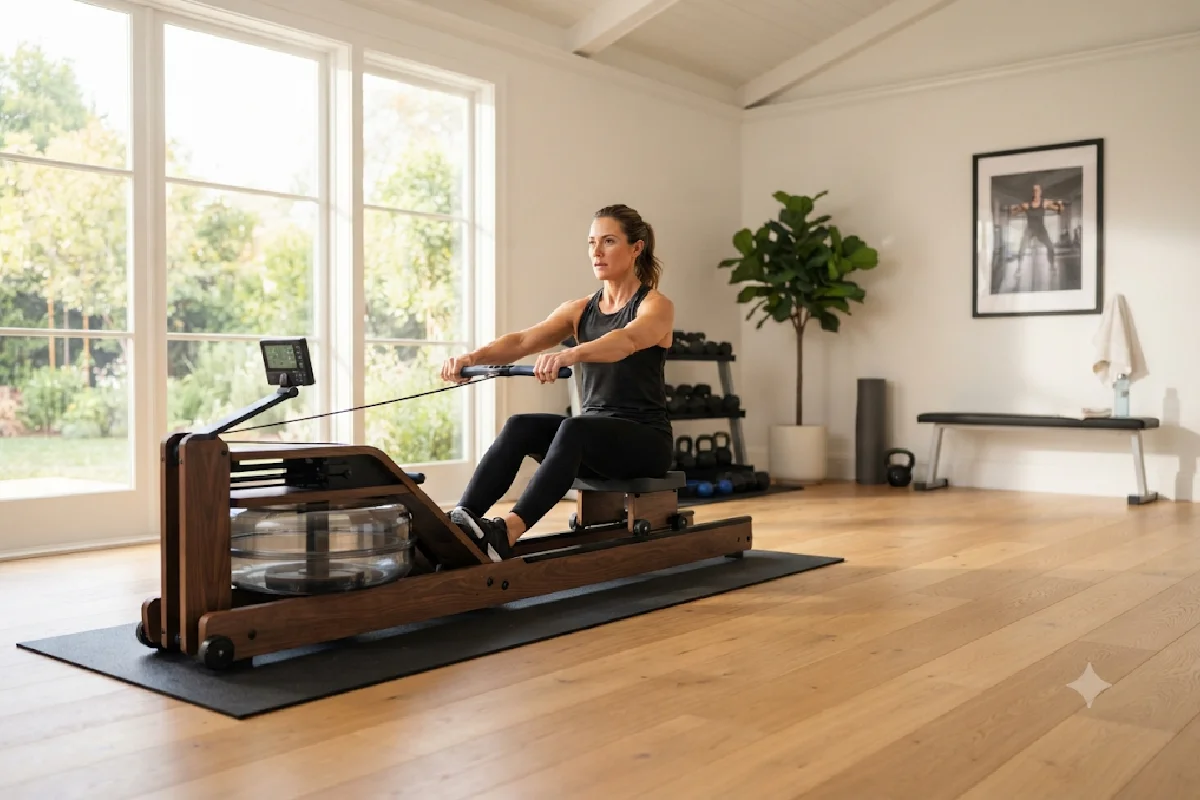



These are low impact machines that can be adjusted to work your upper and lower body. There are various types of rowing machines.
There are high performance ones, quiet interactive ones. Decide what type you want to use, how much you want to spend, what type of resistance you want and how often you want to use.
Things to look for:
Table of Contents
Why Choose A Rowing Machine
Work numerous large muscles!
Works your lower body, back, arms and core. Improves your cardio and muscle stamina.
Pros:
- Improves cardio – Improves your aerobic stamina.
- Full body – Works your legs, glutes, back, arms and core.
- Low impact – Foot plates.
- Adjustable resistance – Suitable for your fitness level.
- Easy to use – Can be used in your home easily.
Not a strength machine however can be a great addition to your weights, resistance bands and bodyweight exercises.
Best Rowing Machines For Home
Resistance:
Air Resistant
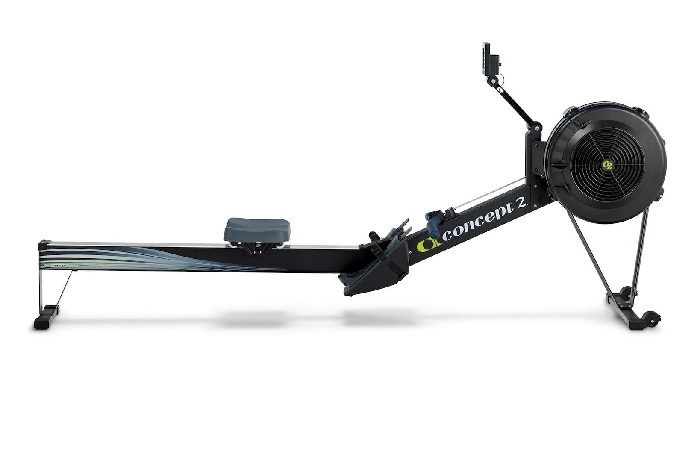 Use flywheel resistance. The harder you row the more resistance.
Pros:
- Perfect for steady and interval training.
- Responsive.
- Most have good tracking.
- Popular.
Cons:
- May not be quiet.
- Have to clean.
- Larger.
Best for Regular Use, Interval Training and Tracking.
Magnetic
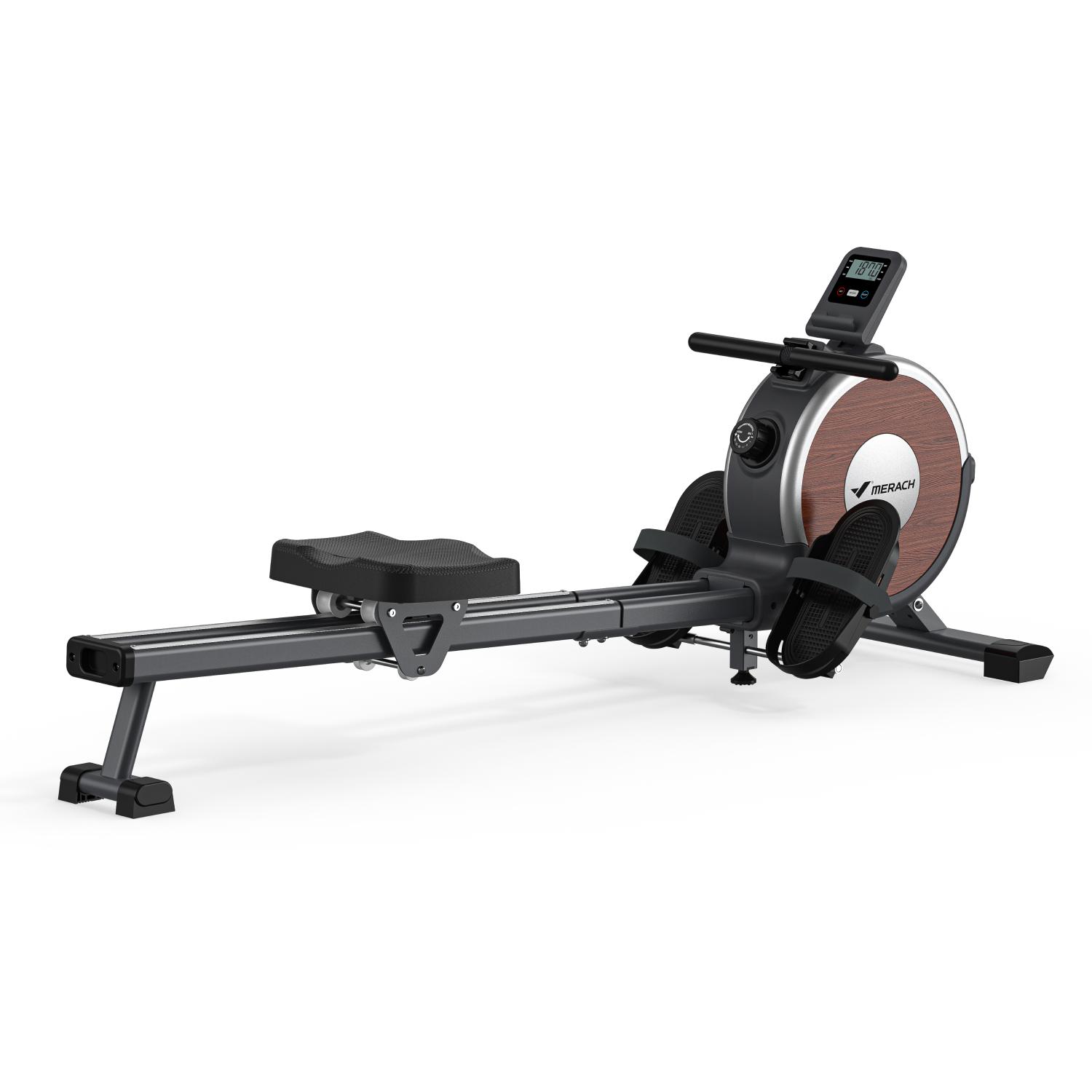 Use magnetic and flywheel resistance. Most will have a variety of resistances.
Pros:
- Quiet.
- Easy to adjust.
- Great for beginners.
- Most are compact.
Cons:
- Not the same feeling as air/water.
- Some are electric.
- Not as responsive.
Best for Beginners and Quiet.
Water
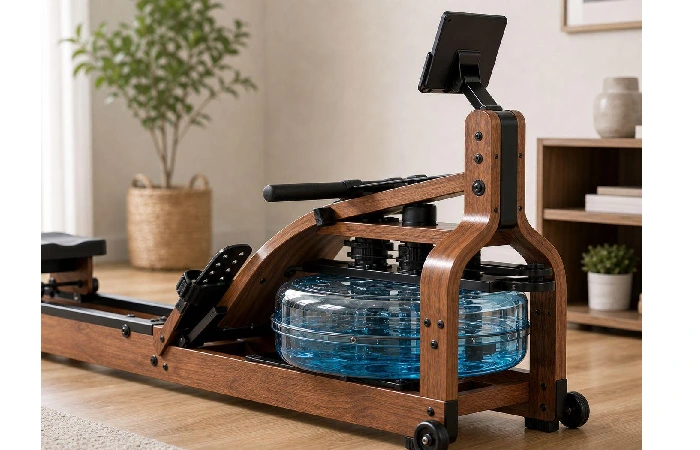
Use paddles in the water tank. The harder you row the more resistance.
Many people love these as they feel very natural. Some are even made from wood.
Pros:
- Smooth.
- Responsive.
- Natural sound.
- Great design.
Cons:
- Can be expensive.
- Have to maintain.
- Heavy.
Best for Love the feeling of water and Luxury.
Hydraulic
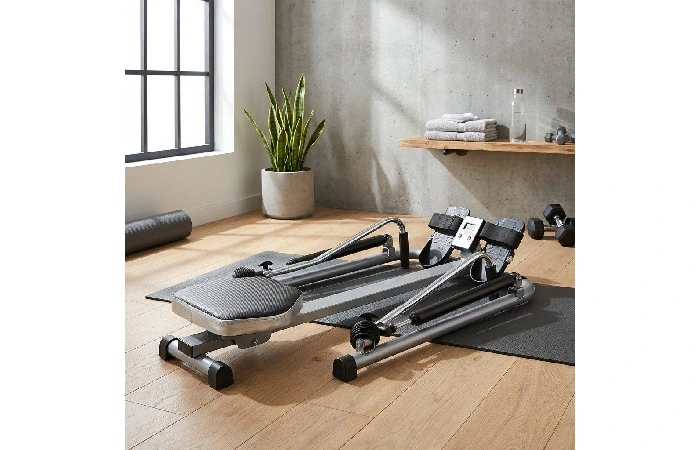
Use cylinders/pistons. These are usually smaller and cheaper than traditional. Not as nice but some have split handles.
Pros:
- Usually cheap.
- Compact.
- Great for basic home use.
- Some are adjustable.
Cons:
- Not natural.
- Not as smooth.
- Not all the same quality/resistance.
Best for Beginners, Compact & Cheap.
Comparison Table
| Resistance | Main Pros | Best For |
|---|---|---|
| Air | Medium/HIGH | Responsive Performance Training. |
| Magnetic | Usually LOW | Quiet Apartment & Beginners. |
| Water | Medium | Natural Smooth. |
| Hydraulic | Varies | Compact Budget. |
Overall there isn’t really a ‘best’ option. Think about what you prefer, what space you have and your budget.
What To Look For
Make sure they have the correct features. They should be comfortable and stable.
Size
Rowing machines can be large. Make sure you have enough space.
- Length & Width.
- Arms & Elbows.
- Around flywheel/water tank.
- Standing or folding.
- Will they go through your doors?
Some can be split into 2 parts to make them smaller. Some are standing. If they are folding make sure you have enough space.
Seat
A comfortable seat will help.
Should be able to move along the rail. Handles should be comfortable. Foot plates should be secure.
If Possible try them out. What feels comfortable to you may not to someone else.
Resistance
Think about what resistance you want.
Magnetics will have a variety of resistance. Air and Water are responsive. Make sure they are easy to increase the resistance.
Screen
A screen can help.
Look for:
- Timer.
- Distance.
- Strokes per minute.
- Pace.
- Calories (Approx).
- Power (If Possible).
Some will have bluetooth, Heart Rate and apps. These can be included or additional.
Weight Limit
Always check the recommended weight limit. The frame, rails, foot plates and moving parts should be strong.
They should be stable. If you are going to use them regularly go for something durable with spares.
Noise
If you are planning on using them early in the morning or with others go for something quiet. Magnetics are usually quiet.
Some may need more maintenance. Air may need cleaning of the flywheel and rails. Water will need some maintenance. Follow the company guidelines.
How Much Should I Spend?
Depending on the resistance, quality, screen and features.
Most will fall into 4 categories.
| Price | Type |
|---|---|
| Cheap | Basic resistance and screen with little features. |
| Mid Range | More stable and smooth. More settings. |
| Upper Mid Range | Durable with tracking. |
| Expensive | High tech with screen, interactive and additional features. |
The higher the price doesn’t mean a better workout. If you’re only going to use them regularly then a reliable mid range will be fine.
Also think about postage, assembly, warranties, spares and app subscriptions.
Using Your Rowing Machine At Home
Ensure you have the correct form. There are 4 points.
Catch
Sitting with knees bent, arms straight and hips forwards. Shoulders relaxed.
Drive
Drive from your legs. Legs almost straight. Lean back slightly. Pull handle to lower ribs.
Finish
Legs straight. Lean back slightly. Handle should be at lower chest. Don’t lean back too much.
Recovery
Arms straight. Lean forwards. Knees bent. Slide back.
Everything should be smooth. Remember LBA-ABA.
Using As A Beginner
If you are completely new to indoor rowers start with short sessions to get used to the correct form.
Below is a simple 15 minute session:
| Time | Activity |
|---|---|
| 3 mins | Warm Up (Easy) |
| 9 mins | Main (2 mins easy, 1 mins medium hard x3) |
| 3 mins | Cool Down (Light Easy) |
Main should be completed 3 times.
Depending on your fitness adjust the times. Take plenty of breaks especially if you are a beginner.
Common Mistakes
If you aren’t doing the correct form you won’t get the most out of your machine. Common mistakes include:
- Too much use of your arms. Focus on driving from your legs.
- Leaning back. Keep your back in a comfortable neutral position.
- Too quick recovery. Move back slowly.
- Too much resistance. Start off with easy resistance and focus on your form.
- Feet not secure. Make sure your feet are secured.
- No warm up. Warm up with a few minutes of easy rowing.
Stop if you feel any pain.
FAQ’s
1) What Is The Best Rowing Machine For My Home Gym?
It depends on what you want to use it for. Air are great for performance training. Magnetics are usually quiet. Water are natural.
2) Can They Be Used By Beginners?
Yes! They can be used for short low intensity sessions. Once you become fitter and improve your form they can be used for longer.
3) Are Magnets Better Than Air?
It depends! They are usually quiet and easy to adjust. Air are responsive.
4) How Much Space Will I Need?
Ensure you have enough space. Measure once assembled.
5) Can I Use Them Every Day?
Some can be used every day. If you are a beginner give yourself some rest days and adjust the intensity.
6) Will It Help Me Manage My Weight?
Yes! It will help you burn energy. If combined with a healthy diet and regular physical activity you can create a calorie deficit. This will depend on your overall energy balance.
Final Thoughts
The best rowing machines for your home gym will depend on your space, budget, fitness and workout. If you want to do performance training air can be great. If you want something quiet magnetics can be great. Water will be smooth. Hydraulics can be great if you want something compact and cheap.
Make sure they are comfortable, stable, resistant, storage, warranty & maintenance. Most importantly make sure you enjoy using them regularly. Combined with strength training, healthy diet and plenty of recovery you will achieve your overall fitness goals.
Saba Mirza is a Health, Wellness & Lifestyle Writer at Being Healthy Life with 3+ years of writing experience. She creates clear, informative, and reader-focused content covering health, wellness, nutrition, fitness, natural health, and lifestyle topics.
View Profile →
Sameena Begum is a health, technology, and digital content reviewer who reviews selected articles to help ensure that information is presented clearly, accurately, and responsibly.
View Profile →
Dr. Syed Imtiaz is a qualified medical professional with MBBS and MD qualifications and 5+ years of experience. As a Medical Reviewer at Being Healthy Life, he reviews selected health and wellness content for medical accuracy, clarity, appropriate context, and responsible presentation.
View Profile →