
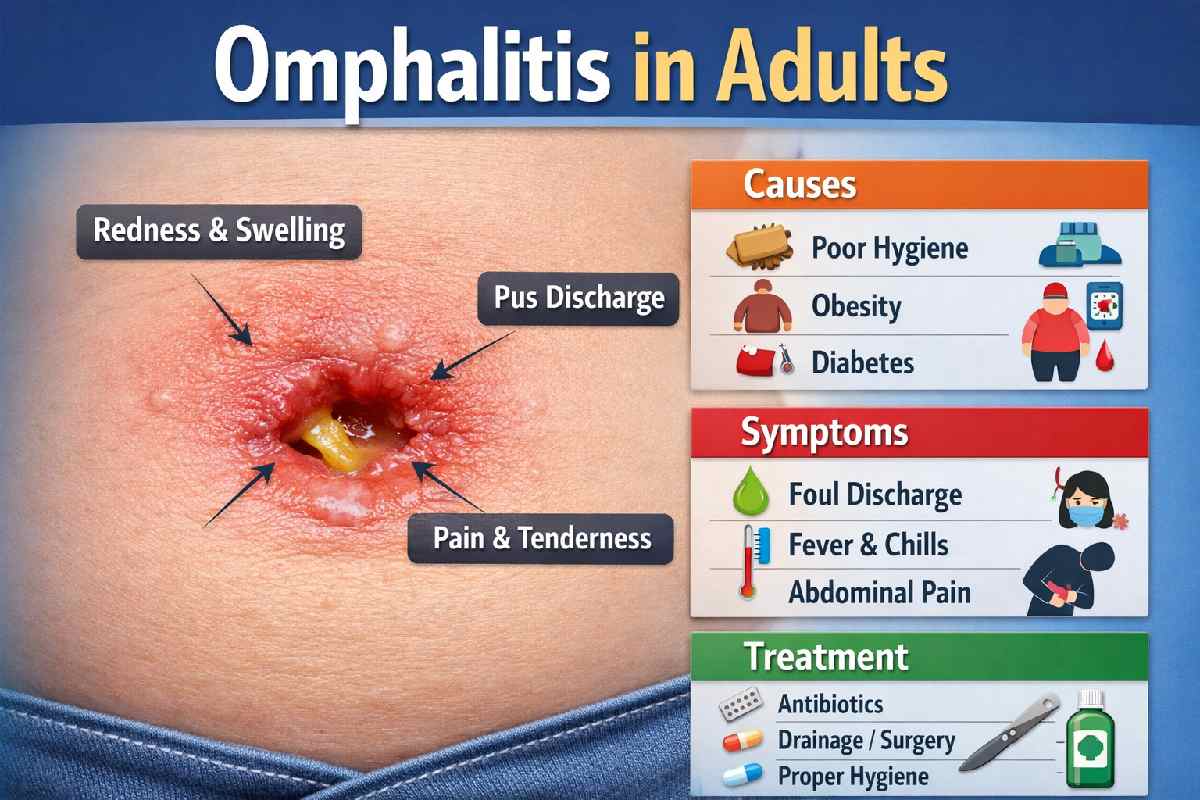
Omphalitis Infections of the umbilical (navel) area are uncommon adult infections which are clinically severe. Even though this is more prevalent in newborns, cases of it are increasing in adults due to poor hygiene, obesity, preexisting medical conditions and lifestyle modification.
Most individuals are likely to overlook the initial symptoms such as minor redness or discharge of the navel and believe that it is not a major issue. But untreated omphalitis may develop into serious infections like development of abscess, necrotizing fascicitis or even systemic sepsis.
This is a comprehensive guide to omphalitis in adults, its causes and symptoms, diagnosis, treatment choice, cost issues, prevention methods and the opinion of the expert.
Table of Contents
What is Omphalitis?
Omphalitis can be defined as an inflammation of the umbilicus and the surrounding tissues which is generally a result of bacteria invasion. In adults, the disease is often polymicrobial i.e. there is a mixture of more than one type of bacteria.
As compared to neonatal omphalitis, adult omphalitis is normally related to:
- Bacterial and cleaning up debris
- Abnormalities of structure (e.g. remnants of the urachal)
- Chronic skin conditions
- Change of lifestyle and hygiene
Unless treated in time, the condition may spread further into the abdominal tissues.
| Category | Details |
| Definition | Infection of the umbilical cord stump in newborns |
| Cause | Bacterial infection (poor hygiene, contaminated cord care) |
| Affected Group | Mostly newborn babies |
| Common Bacteria | Staphylococcus, Streptococcus, E. coli |
| Symptoms | Redness, swelling, pus discharge, foul smell, fever |
| Risk Factors | Poor cord care, low birth weight, unhygienic delivery conditions |
| Complications | Sepsis (serious infection), tissue damage |
| Diagnosis | Physical examination by a doctor |
| Treatment | Antibiotics, proper cleaning, sometimes hospitalization |
| Prevention | Clean cord care, hand hygiene, sterile delivery practices |
Anatomy of the Umbilicus: Why Infection Occurs
Umbilicus is basically a scar remaining after the umbilical cord has been cut off. It may also be of different depth and form in the adult form:
- Deep navel: Higher risk due to moisture retention
- Shallow navel: Lower risk but still vulnerable
Why the Navel is Prone to Infection:
- Warm, moist environment
- Limited airflow
- Dehydration of the skin, lint, dead skin
- Problems with proper clean up
Causes of Omphalitis in Adults
Prevention and treatment necessarily involve the understanding of the root causes.
- Poor Hygiene

This is the most common cause.
- Irregular cleaning of the navel
- Sweat and dirt accumulation
- Improper drying after bathing
- Bacterial Infection
Common bacteria involved include:
- Staphylococcus aureus
- Streptococcus pyogenes
- Escherichia coli
- Klebsiella pneumoniae
These bacteria thrive in moist environments and can quickly multiply.
- Umbilical Foreign Bodies (Omphalolith)
Also known as navel stones, these are formed by:
- Lint buildup
- Hair accumulation
- Keratin deposits
They act as a breeding ground for bacteria.
- Urachal Abnormalities
A urachal remnant is a leftover fetal structure connecting the bladder to the umbilicus.
Types:
- Patent urachus
- Urachal cyst
- Urachal sinus
These can lead to recurrent infections and require surgical intervention.
- Obesity
Obesity significantly increases risk due to:
- Deep umbilical folds
- Excess sweating
- Reduced ventilation
- Diabetes and Immunosuppression
People with weakened immune systems are more prone to infections.
- Poor wound healing
- Increased bacterial growth
- Higher recurrence rate
- Navel Piercing
- Introduction of bacteria during piercing
- Poor aftercare
- Metal allergies (healthline)
Symptoms of Omphalitis in Adults
Symptoms can range from mild irritation to severe infection.
Early Symptoms
- Redness around the navel
- Mild swelling
- Itching or irritation
Moderate Symptoms
- Pain or tenderness
- Foul-smelling discharge
- Yellow or green pus
Severe Symptoms
- Fever
- Abscess formation
- Skin thickening
- Spreading redness
Symptom Severity Chart
| Symptom | Mild | Moderate | Severe |
| Redness | ✓ | ✓ | ✓ |
| Pain | ✗ | ✓ | ✓✓ |
| Discharge | ✗ | ✓ | ✓✓ |
| Fever | ✗ | ✗ | ✓ |
| Abscess | ✗ | ✗ | ✓ |
Types of Omphalitis in Adults
| Type | Description | Risk Level |
| Acute | Sudden infection with pain and discharge | Moderate |
| Chronic | Long-term recurring infection | Moderate |
| Abscess-forming | Pus-filled swelling | High |
| Complicated | Involves deeper tissues or urachal anomalies | Very High |
Diagnosis of Omphalitis
Accurate diagnosis ensures proper treatment.
Clinical Examination
Doctors assess:
- Redness and swelling
- Type of discharge
- Pain level
Laboratory Tests
| Test | Purpose |
| CBC | Detect infection |
| Culture test | Identify bacteria |
| Blood sugar | Check diabetes |
Imaging
| Method | Use |
| Ultrasound | Detect fluid or abscess |
| CT Scan | Identify deep infections |
Treatment of Omphalitis in Adults
Treatment varies depending on severity.
- Basic Care (Mild Cases)
- Clean with saline solution
- Use antiseptic creams
- Keep area dry
- Antibiotic Treatment
Common Medications
| Antibiotic | Use |
| Amoxicillin | Mild infections |
| Ciprofloxacin | Broad-spectrum |
| Metronidazole | Anaerobic bacteria |
Duration: 5–14 days
- Surgical Treatment
Required in advanced cases:
- Abscess drainage
- Removal of infected tissue
- Urachal remnant excision
- Home Remedies (Supportive Only)
These should not replace medical care:
- Tea tree oil (antibacterial)
- Coconut oil (moisturizing)
- Warm compress (pain relief)
Recovery Timeline
| Severity | Recovery Time |
| Mild | 5–7 days |
| Moderate | 1–2 weeks |
| Severe | 2–4 weeks |
Cost of Treatment in India

| Treatment | Estimated Cost |
| Consultation | ₹300 – ₹1,000 |
| Antibiotics | ₹200 – ₹1,500 |
| Tests | ₹500 – ₹3,000 |
| CT Scan | ₹2,000 – ₹8,000 |
| Surgery | ₹20,000 – ₹80,000 |
Complications of Omphalitis
If untreated, complications can be severe.
Major Complications
- Abscess formation
- Cellulitis
- Necrotizing fasciitis
- Peritonitis
- Sepsis (jamanetwork)
Risk Factors Summary
- Poor hygiene
- Obesity
- Diabetes
- Deep navel structure
- Piercings
- Weak immunity
Prevention of Omphalitis
Daily Hygiene Routine
- Wash navel with mild soap
- Dry thoroughly
- Avoid moisture buildup
Preventive Care Table
| Action | Frequency |
| Cleaning | Daily |
| Inspection | Weekly |
| Antiseptic use | As needed |
Lifestyle Changes
- Maintain healthy weight
- Wear breathable clothes
- Avoid tight clothing
Diet and Immunity
Strong immunity helps prevent infections.
Recommended Foods
- Fruits rich in Vitamin C
- Yogurt
- Nuts and seeds
- Leafy vegetables
Avoid
- Sugar
- Processed foods
- Alcohol
Omphalitis vs Other Conditions
| Condition | Difference |
| Fungal infection | Itchy, less painful |
| Hernia | Bulge without infection |
| Cyst | No discharge |
| Omphalitis | Infection with pus |
When to See a Doctor
Seek immediate care if:
- Persistent discharge
- Severe pain
- Fever
- Rapid spread
Frequently Asked Questions (FAQs)
Is omphalitis serious in adults?
Yes, it can become serious if untreated.
Can it heal without antibiotics?
Mild cases may improve, but antibiotics are usually needed.
Is it contagious?
No, but bacteria can spread through poor hygiene.
Can it recur?
Yes, especially if underlying causes are not treated.
Expert Insights
Medical experts emphasize:
- Early diagnosis is key
- Hygiene plays a major role
- Chronic cases need deeper evaluation
Conclusion
Adults may have omphalitis, although this is unlikely to happen. The condition is often mild in nature but can end up becoming severe and resulting in infections in the absence of treatment.
The best strategy would comprise:
- Maintaining proper hygiene
- Identifying symptoms early
- Seeking timely medical care
Omphalitis can be well treated and prevented through proper treatment and prevention.