

Mindfulness for Stress Relief is a practice that involves paying purposeful, non‑judgmental attention to the present moment — thoughts, sensations, and surroundings — to calm the mind and nervous system. It’s one of the most widely studied and effective approaches for managing stress, backed by scientific research.
Table of Contents
What Is Mindfulness and How Does It Reduce Stress?
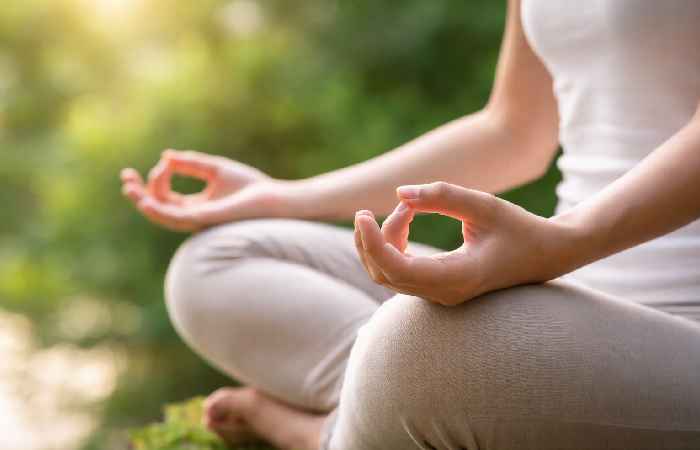
The Core Principles of Mindfulness
Mindfulness refers to the act of focus, attentive, non judgmental awareness that is directed at the present moment. You base your consciousness in what is going on presently rather than rerunning the argument of yesterday or practising the speech you are going to have tomorrow.
Understanding how stress can change the way you think and respond can also make it easier to recognize stressful thought patterns and return your attention to the present moment.
The mindfulness practice has three fundamental principles:
Present-moment focus — You are aware of what is happening at present instead of whether it was in the past or will happen in the future.
Non-judgmental observation — You observe, without experiencing good or bad thoughts. Stress thoughts are not something to combat, they are merely processes in the mind, one ought to watch.
Acceptance — You accept things as they are and not the way you want them to be. This does not imply passivity, but rather knowing what is real which makes it easier to react appropriately.
this article belongs to Stress Management
The Science Behind Stress Reduction
Once your amygdala (alarm system in your brain) is activated by stress, it causes the flight-or-fight response. Cortisol floods your system, heart rate spikes, and thinking narrows. This helped to evade predators but fails miserably with the present day stressors.
Mindfulness interrupts this cycle through measurable brain changes:
| Mechanism / Strategy | How It Reduces Stress | Scientific Evidence |
| Mindfulness & Meditation | Promotes present-moment awareness; reduces rumination and anxiety. | Studies show mindfulness lowers cortisol levels and improves brain regions associated with emotional regulation (prefrontal cortex, amygdala). |
| Physical Exercise | Increases endorphins (“feel-good” hormones), reduces adrenaline and cortisol. | Regular aerobic exercise is linked to improved mood, lower stress perception, and reduced symptoms of depression. |
| Deep Breathing / Diaphragmatic Breathing | Activates parasympathetic nervous system, slows heart rate, promotes relaxation. | Research demonstrates controlled breathing lowers blood pressure and stress hormone levels. |
| Progressive Muscle Relaxation | Systematically tensing and relaxing muscles reduces physical tension. | Shown to lower anxiety scores and improve sleep quality. |
| Social Support & Connection | Talking to friends/family reduces perceived stress; oxytocin release promotes calmness. | Strong social ties are correlated with lower stress hormone (cortisol) levels and improved immune response. |
| Cognitive Behavioral Techniques (CBT) | Reframes negative thoughts, reducing mental stress load. | CBT reduces perceived stress, improves coping strategies, and decreases anxiety/depression symptoms. |
| Nature Exposure / Green Therapy | Immersion in nature lowers sympathetic nervous system activity. | Studies show decreased heart rate, blood pressure, and cortisol levels after nature walks. |
| Adequate Sleep | Regulates stress hormones and improves emotional resilience. | Sleep deprivation increases cortisol and impairs cognitive/emotional functioning; good sleep reduces stress sensitivity. |
| Nutrition & Hydration | Balanced diet stabilizes blood sugar and supports neurotransmitter function. | Omega-3s, magnesium, and B-vitamins linked to reduced anxiety and better mood regulation. |
Mindfulness vs. Meditation: Understanding the Difference
The two terms are used interchangeably thus becoming confusing.
Meditation This is a ritual–you find some time to sit and breathe and exercise your concentration. It is the exercise of the brain.
Mindfulness refers to the larger attribute of mindfulness that you can in any given moment. It is possible to eat mindfully, walk mindfully, or listen mindfully. It is with the power you have developed in the mental gym.
Meditation is one way that leads to mindfulness, but not the only one. Mindfulness can be practiced when cleaning up the dishes, standing in a queue, or during a conversation.
Evidence-Based Effects of Mindfulness on Stress
| Effect / Outcome | Description | Scientific Evidence |
| Reduced Cortisol Levels | Mindfulness practice lowers stress hormone cortisol, helping the body respond better to stress. | Multiple RCTs show reductions in salivary and blood cortisol after 8–12 weeks of mindfulness training. |
| Improved Emotional Regulation | Enhances awareness of thoughts and feelings, reducing rumination and anxiety. | Neuroimaging studies indicate increased prefrontal cortex activity and decreased amygdala reactivity in mindfulness practitioners. |
| Lower Perceived Stress | Participants report feeling less stressed and more in control. | Mindfulness-Based Stress Reduction (MBSR) programs consistently show significant reductions in Perceived Stress Scale (PSS) scores. |
| Better Sleep Quality | Reduces insomnia and improves sleep duration, indirectly lowering stress. | Studies link mindfulness meditation to improved sleep efficiency and reduced sleep latency. |
| Enhanced Autonomic Nervous System Balance | Activates parasympathetic (“rest and digest”) nervous system. | Heart rate variability (HRV) increases in mindfulness practitioners, indicating better stress resilience. |
| Reduced Anxiety & Depression Symptoms | Mindfulness helps manage chronic stress-related mood disorders. | Meta-analyses confirm reductions in anxiety and depressive symptoms across diverse populations. |
| Increased Cognitive Flexibility | Improves attention, focus, and adaptability under stress. | Studies show enhanced performance on tasks requiring executive function after mindfulness interventions. |
What the Research Shows
The support of mindfulness keeps becoming stronger:
A 2018 Harvard study found that eight weeks of mindfulness training increased gray matter density in brain regions associated with memory, empathy, and stress regulation.
According to the American Psychological Association, the Mindfulness-Based Stress Reduction (MBSR) programs have repeatedly proven effective across the whole range of populations: including healthcare workers, as well as chronic pain patients.
The meta-analysis study on 29 studies, released in 2020, found that mindfulness interventions decreased stress levels significantly in healthcare professionals, and the impact of interventions persisted six months after the intervention.
A study by Johns Hopkins on more than 19, 000 studies on meditation established moderate evidence that mindfulness programs reduce anxiety, depression, and pain.
Recommended Centers & Programs for Mindfulness‑Based Stress Relief
India
| Centre / Program | Location / Format | What It Offers | Notes / Approx. Cost |
| Centre for Mindfulness India | India (in‑person & online) | 8‑week mindfulness course blending MBSR & MBCT for stress, anxiety & wellbeing. | Evidence‑based training; Indian resident course ~₹23,500. |
| Inner Sight – MBSR Courses (Auroville) | Auroville, Tamil Nadu (in‑person) & online | MBSR (traditional evidence‑based 8‑week format) & coaching paths. | MBSR ~₹6,900 (in‑person); online formats available. |
| Mteen – Mindfulness Programs | Bengaluru (online & offline) | Structured mindfulness workshops for stress, focus, emotional resilience. | 4‑week programs tailored for students, professionals. |
| MindfulMasters – MBSR Training | India (online & in‑person) | Mindfulness‑Based Stress Reduction program (includes meditation, mindful living practices). | Online registration available; course durations vary. |
| Cognizavest Mindfulness Courses | India (online) | Structured mindfulness training from basics to practitioner level. | Fees start from ~₹1,999; includes breath awareness & body scan techniques. |
| Retreats & Mindfulness Yoga Programs | Various wellness resorts/ashrams (e.g., Dharamshala, Rishikesh) | Mindfulness meditation, yoga & stress‑management retreats. | Often combine meditation with yoga & Ayurvedic support. |
Uk
| Centre / Program | Type / Format | What It Offers | Notes / Cost |
| Centre for Mindfulness Research and Practice | Academic / Training | Evidence‑based MBSR research, programmes and resources | Based at Bangor University — strong research backing; good for structured learning |
| Mindfulness Now/ UK College of Mindfulness Meditation | Training Provider | MBSR & MBCT integration, teacher training and personal practice support | Accredited mindfulness courses across UK locations |
| The Mindfulness Project | Meditation Centre | Mindfulness sessions and courses | London‑based with live and online sessions focused on stress relief |
| Mindfulness Sussex | Meditation Centre | Mindfulness courses & support | Highly rated community mindfulness offerings |
| Mindful Living Community | Wellness Program | Mindfulness classes, community practice | Offers regular mindfulness support and stress‑relief programmes |
| Mindful Surrey UK Mindfulness | Meditation Centre | Group mindfulness sessions | Registered centre offering guided practices |
| Mindful Elements | Wellness Program | Mindfulness‑based stress workshops | Good reviews for stress & wellbeing support |
| The School of Mindful Healing | Wellness Program | Mindfulness coaching & courses | Well‑reviewed centre focusing on mindful wellbeing |
| Warwickshire Mindfulness | Wellness Program | Mindfulness training | Local practitioner community |
| Mindfulness Berkshire | Wellness Program | Mindfulness sessions | Small‑group mindfulness and support |
| North London Buddhist Centre MBSR course | In‑Person Course | 8‑week MBSR course with meditation & mindful movement | ~£280 (concessions available) |
| London Centre for Mindfulness MBSR | Online / Group Course | 8‑week structured mindfulness for stress | Typical cost ~£250, includes materials (londoncentreformindfulness.com) |
| MBSR via ManHealth UK | Group Course | 8‑week mindfulness exploration for daily life & stress coping | Course ~£225 (group setting) |
| South Coast Mindfulness MBSR (Portsmouth) | Group Course | 8‑week MBSR with guided meditation & retreat day | Course ~£245 |
| British Mindfulness Institute – Online MBSR | Online Programme | 8‑week interactive online MBSR (self‑paced with guidance) | About ~£179 |
Simple Mindfulness Techniques for Immediate Stress Relief
1-Minute Mindful Breathing Exercise
This trick is quick to relieve the stress: when there is a meeting or an uncomfortable conversation, stress peaks, and there is nothing like this to calm the nerves:
- Pause whatever you’re doing — Stop mid-task if necessary
- Place one hand on your belly — Feel it rise and fall
- Breathe in slowly for 4 counts — Through your nose
- Hold for 2 counts — Gently, without strain
- Exhale for 6 counts — Through your mouth
- Repeat 5-10 times — Until you feel calmer
The long breath engages your vagus nerve indicating your nervous system to unwind. You may do it at your desk or even in the bathroom or when making a phone call on mute.
The 5-4-3-2-1 Grounding Technique
This practice is sensory and causes you to be out of anxious thoughts and into the present:
Notice 5 things you can see — Look around and name them silently (blue pen, coffee mug, window, plant, laptop)
Note 4 objects you are able to touch — touch the texture (desk, sweater, cold air, hard floor)
Name 3 things you can hear — Listen carefully (keyboard clicking, conversation in other room, air conditioning)
Notice 2 things you can smell — Even subtle scents count (coffee, hand lotion)
Notice 1 thing you can taste — Your mouth right now (mint from gum, coffee residue, or just your neutral taste)
This technique is especially effective during panic attacks or overwhelming moments. It interrupts rumination by redirecting attention to concrete sensory data.
Progressive Muscle Relaxation
Mental stress is accompanied by physical tension. This practice deals with the following:
- Start with your feet — Tense your toes and feet tightly for 5 seconds
- Release completely — Notice the contrast between tension and relaxation
- Move to calves — Tense, hold, release
- Continue upward — Thighs, buttocks, stomach, chest, hands, arms, shoulders, neck, face
- Tense each area for 5 seconds — Then release for 10-15 seconds
- End with full-body awareness — Notice the overall feeling of relaxation
Total time: 3-5 minutes. You will find that you are in a lot of tension that you were not even aware of, especially on your jaw, shoulders and forehead.
Body Scan Meditation
The process develops sensitivity to physical experiences and dissipates the tension:
- Lie down or sit comfortably — Back supported, body relaxed
- Close your eyes — Take three deep breaths
- Bring attention to your feet — Notice temperature, pressure, tingling
- Slowly move up your body — Ankles, calves, knees, thighs, hips, abdomen, chest, back, hands, arms, shoulders, neck, face, scalp
- Spend 30-60 seconds on each area — Simply observe without changing anything
- Notice areas of tension — Breathe into them without forcing relaxation
- Complete the full scan — Usually takes 10-20 minutes
Body scans work well especially when one is going to sleep better or during the day to reset during the stressful working days.
Mindful Walking

This method is appropriate to individuals who struggle to sit and meditate:
- Choose a path — Indoors or outdoors, 10-20 steps is enough
- Walk slowly — Much slower than normal pace
- Notice the sensation of each step — Heel touching ground, weight shifting forward, toes pushing off
- Coordinate with breath — Inhale for 3-4 steps, exhale for 3-4 steps
- When mind wanders — Gently return attention to feet and breath
- Practice for 10-15 minutes — Or longer if enjoyable
It is also possible to walk in a mindful manner by just walking at regular speed, which is not noticeable to others. Pay attention to the beat of your footsteps when you are commuting or taking a lunch.
Loving-Kindness Meditation
This practice decreases the level of interpersonal stress and self-accusations:
- Sit comfortably — Close eyes and take several deep breaths
- Direct kindness toward yourself — Silently repeat: “May I be happy. May I be healthy. May I be safe. May I live with ease.”
- Visualize someone you love — Repeat: “May you be happy. May you be healthy. May you be safe. May you live with ease.”
- Think of a neutral person — Someone you see regularly but don’t know well (barista, neighbor)
- Extend to a difficult person — Someone causing you stress (start with mildly difficult, not your worst enemy)
- Expand to all beings — “May all beings be happy, healthy, safe, and live with ease.”
- Practice for 10-15 minutes — Notice any emotional shifts
It has been proven that loving-kindness meditation enhances positive emotions and reduces depressive symptoms.
Mindful Eating
Transform meals into stress-relief opportunities:
- Remove distractions — No phone, TV, or reading
- Observe your food — Colors, shapes, arrangement
- Notice smells — Take 10 seconds to appreciate aroma
- Take one small bite — Smaller than usual
- Chew slowly — 20-30 times before swallowing
- Notice flavors and textures — How they change as you chew
- Pause between bites — Put your fork down
- Pay attention to fullness — Stop when satisfied, not stuffed
Start with just one mindful meal per week. Many people report eating less while enjoying food more.
How to Start a Mindfulness Practice for Long-Term Stress Relief?
| Step | Action / Practice | Tips for Consistency |
| 1. Start Small | Begin with 5–10 minutes per day. | Short sessions are easier to sustain than long, infrequent ones. |
| 2. Choose a Practice | Examples: mindful breathing, body scan, walking meditation, or guided meditation. | Pick one that feels natural; you can explore others later. |
| 3. Set a Regular Time | Schedule practice at the same time each day (morning, lunch break, or evening). | Linking to an existing routine (like after brushing teeth) improves adherence. |
| 4. Create a Calm Space | Find a quiet, comfortable spot, free from distractions. | Minimal interruptions support focus and immersion. |
| 5. Focus on the Breath or Body | Pay attention to inhalation/exhalation or bodily sensations. | If mind wanders, gently bring attention back—wandering is normal. |
| 6. Use Guided Resources | Apps, videos, or audio guides can help maintain focus and structure. | Popular apps: Headspace, Calm, Insight Timer. |
| 7. Be Patient & Non-Judgmental | Mindfulness is a skill; progress comes gradually. | Avoid self-criticism if thoughts drift or you miss a session. |
| 8. Track Progress & Reflect | Note improvements in mood, stress levels, or sleep. | Journaling can reinforce motivation and awareness of benefits. |
| 9. Gradually Increase Duration | As comfort grows, extend sessions to 15–20 minutes or more. | Longer sessions deepen relaxation and cognitive benefits. |
| 10. Integrate Mindfulness into Daily Life | Practice mindful eating, walking, or listening. | Everyday mindfulness maintains stress relief beyond formal sessions. |
Building Consistency Without Overwhelm
Start absurdly small — Two minutes a day beats ambitious 30-minute plans that you will drop. It is easy to get one going but the first one is the most difficult.
Anchor to existing habits — Practice right after brushing teeth, before morning coffee, or during your commute. The established habit triggers the new one.
Track simply — Check a calendar. Continuation is inspired by the visual chain.
Expect the mind to wander — That is not failure; and that is termed practice. Being aware that you have lost track and getting back to focus IS the practice.
Skip perfectionism — 5 minutes of distractedness is better than no time at all. There are days that will be easy than others.
Common Mistakes and How to Avoid Them
Mistake #1: Trying to “clear your mind” Mindfulness does not mean zero thoughts. It has to do with the transformation of the relationship to thoughts. Whenever you find thoughts, just become aware of them and resume breathing.
Mistake #2: Practicing only when stressed That is just like training when we are having heart attacks. The skill is developed on a daily basis to implement when crisis arises.
Mistake #3: Judging your performance There is no good and bad meditation. Awareness of distraction is success, not failure.
Mistake #4: Waiting for the “right” conditions You do not need to wait until it is just perfect, you need to sit on a pillow and in a clean environment. Exercise in a background noisy place, sitting in a chair, anywhere.
Mistake #5: Giving up too soon The majority of individuals observe changes in the 2-3 weeks, yet neurological intervention requires 6-8 weeks. Take a minimum of a month to test.
Mindfulness-Based Stress Reduction (MBSR): The Gold Standard Program
What Is MBSR?
MSBR is an eight-week program that integrates: developed by Dr. Jon Kabat-Zinn in the University of Massachusetts Medical Center in 1979.
- Mindfulness meditation — Sitting practice with breath focus
- Body scanning — Systematic attention to physical sensations
- Mindful yoga — Gentle movements with awareness
- Group discussion — Sharing experiences and challenges
- Daily home practice — 45 minutes of assigned exercises
MBSR has been named to have an effective program with over 25,000 individuals having undergone their programs and extensive research has proven its success.
How MBSR Works
The program obtains once a week, 2-2.5 hours long, and a full-day retreat (6-8 hours) somewhere in the week six. Home practice is 45 minutes a day with the participants.
New techniques are presented and various side of stress discussed every week:
- Week 1-2: Foundations of mindful awareness
- Week 3-4: Stress physiology and perception
- Week 5-6: Stress reactivity and response patterns
- Week 7-8: Integration into daily life
The systematic method offers accountability, professional advice, and community support which is usually lacking in self-study.
Is MBSR Right for You?
MBSR works well if you:
- Experience chronic stress, anxiety, or pain
- Want structured, evidence-based training
- Benefit from group accountability
- Can commit to 8 weeks and daily practice
- Prefer expert instruction
Consider alternatives if you:
- Need more flexibility in scheduling
- Prefer self-paced learning
- Have budget constraints (programs cost $300-600)
- Want to try mindfulness before formal training
Self-guided practice is the beginning of many people and MBSR is further training that they seek. MBSR programs that are conducted online are more flexible than those that are delivered face to face.
Integrating Mindfulness Into Your Daily Life
Mindfulness at Work

During overwhelming moments: Take three conscious breaths before responding to a stressful email. This 15-second pause prevents reactive responses you’ll regret.
Between meetings: Use transition time mindfully. Instead of checking your phone, take a brief walking meditation to your next meeting.
During tedious tasks: Treat data entry, filing, or email processing as informal practice. Notice the physical sensations of typing or the visual patterns on your screen.
Before important conversations: Spend 2-3 minutes grounding yourself with the 5-4-3-2-1 technique. You’ll enter the conversation calmer and more focused.
Mindfulness During Difficult Conversations
Hear it out: You should listen to everything that the other person has to say, as opposed to planning what you are going to say, you can lay full attention to what they say, how they say it, and how they look.
Be mindful of your reactions: When you are defensive or angry you should be able to recognize the feeling and not act on it in the moment. “I’m noticing anger arising.”
Pause before responding: A delay of 3 seconds is extremely long, but allows the situation to cool down. Choose your response with it and not reacting.
Return to breath: If the conversation becomes heated, focus on your breathing for 2-3 cycles. This activates your parasympathetic nervous system.
Evening Wind-Down Practices
Digital sunset: Stop screen use 30-60 minutes before bed. Use this time for body scans or gentle stretching.
Worry dump: Spend 5 minutes writing down tomorrow’s concerns, then close the notebook. This signals your brain it’s safe to let go.
Gratitude exercise: Identify three particular things that you are thankful about today. This is a diversion of focus on stress to appreciation.
Progressive relaxation: Scan a body with a quick relaxation of the body, starting with the head and the toes. Vast majority of people do not finish it and fall asleep.
Maximizing Your Results: Tips from the Research
How Long Before You See Results?
Research shows a clear timeline:
Week 1: Improved awareness of stress patterns, though stress levels may remain the same
2-3: First noticeable reductions in stress reactivity; better sleep for many people
4-6: Measurable decreases in anxiety symptoms; improved emotional regulation
8+: Structural brain changes visible on MRI; cortisol levels decrease; benefits become more stable
The most important conclusion: the benefits manifest themselves in the long term but accumulate over time. Several days of absence will not cancel the progress, but consistency is important.
Best Times to Practice
Practice in the morning: Establishes a relaxative mood at the beginning of the day, lessens anxiety in the morning, increases concentration. A majority of individuals can maintain this most easily.
Midday practice: Provides stress reset, breaks up work tension, prevents afternoon burnout. Even 5 minutes helps.
Evening practice: Facilitates sleep, processes daily stress, creates transition from work to personal time. Avoid right before bed if it energizes you.
The best time is the one you’ll actually do. Experiment for two weeks with each option, then commit to what fits your schedule.
Combining Mindfulness with Other Stress Management Tools
Mindfulness amplifies other healthy practices:
Exercise: Mindful running or yoga deepens both physical and mental benefits. Notice body sensations rather than distracting yourself.
Therapy: Many therapists integrate mindfulness into cognitive-behavioral therapy (CBT) and other approaches. It enhances emotional awareness.
Journaling: Mindful observation of thoughts, then writing them down, provides powerful insights into stress patterns.
Social connection: Mindful listening improves relationship quality, reducing interpersonal stress.
Time in nature: Combine forest bathing with mindfulness for compounded stress relief. Notice natural details—birdsong, leaf shapes, breeze.
Mindfulness isn’t a replacement for professional help when needed, medication, or lifestyle changes. It’s a powerful complement that makes everything else more effective.