
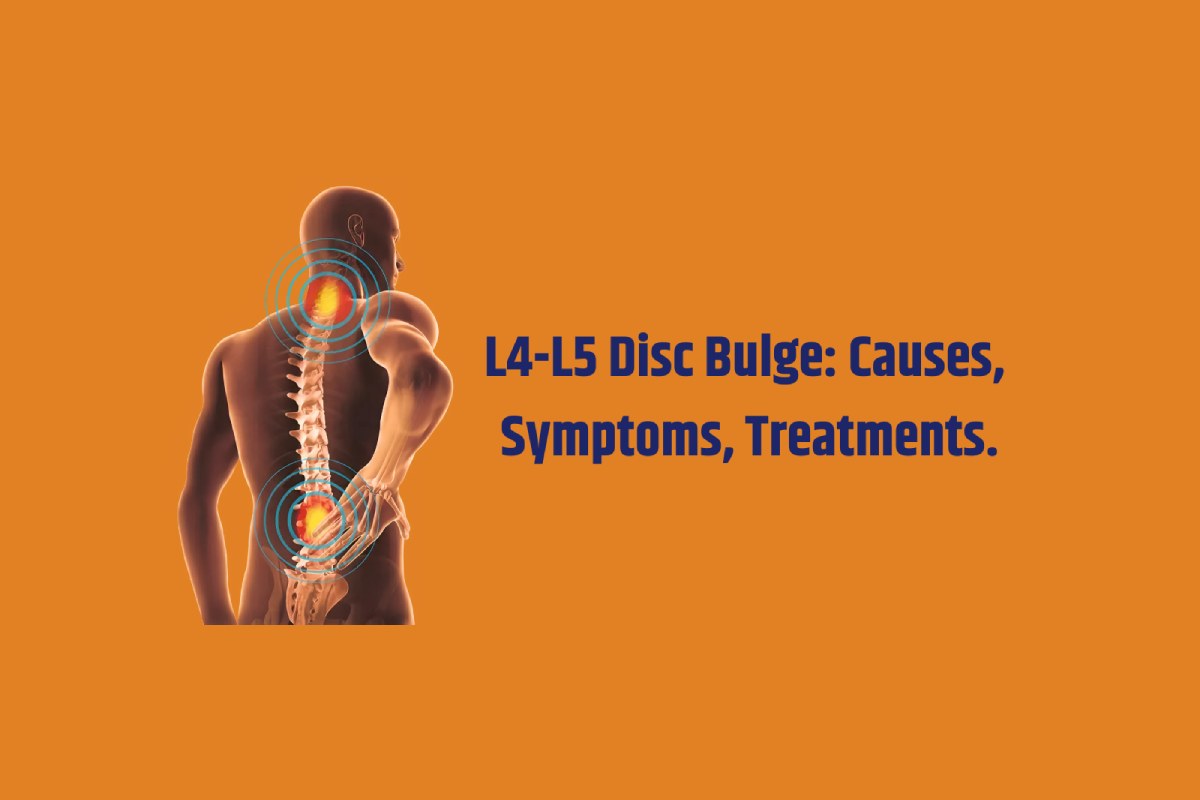
One of the most common health problems in India, lower back pain is becoming prevalent in the young population, IT professionals and the general lifestyle in India. Chronic lower back pain, the disc bulge L4-L5 is one of the main causes, which is a spinal condition that impacts quality of life and mobility greatly.
The L4-L5 portion of the spine is responsible for bearing most of the body weight and is greatly involved in bending, twisting and lifting. Because of the mechanical stress, it is highly vulnerable to injury and degeneration.
In this guide we bring to you all about the L4-L5 disc bulge treatment-causes, symptoms, diagnosis and all the latest treatment options in India.
What is an L4-L5 Disc Bulge?
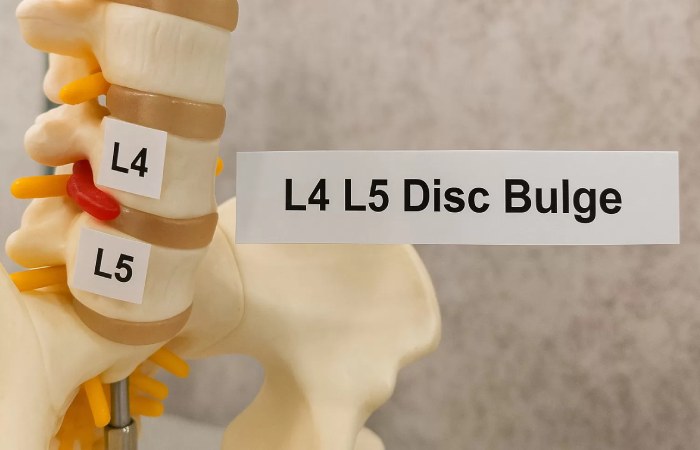
It may come as a surprise but the column of vertebrae with the inter-discal space is there to absorb shock within the spinal column. Lumbar segments of the spine L4/L5 (lower back) include L4 and L5 segments.
L4-L5 disc bulge occurs when the nucleus pulposus (gel like substance within the inner core of the disc) herniates, to ‘bulge’ beyond the outer layer of the disc (annulus fibrosus).
With this condition the difference from the Herniated disc is that with a bulge, the outer wall of the disc does not actually rupture, but it still bulges and compresses the nearby nerves (like the L5 nerve root) which can create pain and nerve related symptoms.
Why is L4-L5 Disc Bulge So Common in India?
With a huge upsurge in spinal problems we are facing an increasing trend in our spinal conditions because of:
- A long duration spent in sitting position (IT jobs and working from home scenario)
- Bad posture
- Physical inactivity
- Increased prevalence of obesity in India
- Excessive usage of smart phones (text neck and poor posture for lumbar region)
Desk jobs and long sitting periods in the urban population in India are one of the main causes of L4-L5 disc issues.
Causes of L4-L5 Disc Bulge
Understanding the reason for the problem helps us know the correct treatment to choose.
Primary Causes
| Explanation | Cause |
| Discs lose water content and elasticity over time | Age-related degeneration |
| Continuous stress on lumbar spine | Poor posture |
| Incorrect lifting techniques strain discs | Heavy lifting |
| Weak core muscles increase spinal load | Sedentary lifestyle |
| Excess weight bandages spinal discs | Obesity |
| Daily bending | Repetitive stress |
| Sudden accidents | Injury or trauma |
Degeneration and mechanical stress are the most common triggers for disc bulges.
Symptoms of L4-L5 Disc Bulge
The specific symptoms are reliant on on the seriousness of the bulge, how far it has advanced and how many of the nearby nerves are involved.
Common Symptoms
- Lower back pain
- Pain down the leg
- Tingling in feet
- Leg weakness
- Difficulty walking
Most usually, L4-L5 disc bulge bandages the L5 nerve; symptoms may be described as a pain traveling from the back to the foot.
Severe Symptoms
- loss of bladder
- severe leg weakness
- difficulty walking
This could mean serious nerve compression is occurring, and direct medical help must be sort.
Diagnosis of L4-L5 Disc Bulge
Once you seek medical attention it is important for an correct diagnosis to be made before any treatment plan is initiated.
Diagnostic Methods
| Purpose | Method |
| Checks mobility, reflexes, nerve function | Physical Examination |
| Confirms disc bulge and nerve compression | MRI Scan |
| Rules out bone abnormalities | X-ray |
| Detailed imaging in complex cases | CT Scan |
MRI scan is considered to be the gold standard in assessing disc bulge, and whether or not nerves are affected.
Overview of L4-L5 Disc Bulge Treatment Options
Treatment varies depending on the extent of the condition, its symptoms and the lifestyle of the individual. The good news is that surgery rarely needs to be considered, and most patients will not need to undergo the procedure.
Research has demonstrated that 70-90% of patients improve with a regime of conservative treatment that focuses on Physiotherapy and making life changes.
Treatment Categories
| Treatment Type | Description |
| Conservative (Non-surgical) | Rest, medicines |
| Minimally invasive | Injections, decompression therapy |
| Surgical | For severe or non-responsive cases |
Stage-Based Treatment Approach
- Mild Disc Bulge
- Occasional pain
- No nerve compression
Treatment:
- Rest (short-term)
- Posture correction
- Light exercises
- Moderate Disc Bulge
- Radiating pain
- Tingling
Solution:
- Physiotherapy
- Pain medicines
- Life changes
- Severe Disc Bulge
- Nerve compression
- Weakness issues
Treatment:
- Injections
- Surgery
Non-Surgical Treatment
Doctors only use the last treatment option like surgery after conservative methods fail.
- Rest and Activity Modification
Rest should be minimal; just enough to ease the pressure, but not so long that you lose muscle strength.
- Medications
Commonly prescribed:
- NSAIDs (pain relief)
- Muscle relaxants
- Nerve pain medications
These help to ease pain but won’t cure the issue.
- Physiotherapy (Most Effective Treatment)
Physiotherapy should be considered to be the foundation of treatment for L4-L5 disc bulge.
It focuses on:
- Firming core muscles
- Improving spinal stability
- Reducing nerve compression
Most patients recover within 4–16 weeks with proper physiotherapy.
- Heat and Cold Therapy
- Cold packs decrease inflammation
- Heat therapy lowers muscles
- Lifestyle Modifications
- Weight management
- Ergonomic sitting
- Avoid prolonged sitting
Slightly Invasive Treatments
When conventional treatment fails, there are some alternative treatment options:
- Epidural Steroid Injections
- Reduce inflammation around nerves
- Provide temporary pain relief
- Spinal Therapy Decompression
- Relieves pressure on discs
- Non-surgical approach
- Regenerative Therapies
- PRP
- Stem cell therapy
The treatment procedures are quite new and there is minimal research conducted on this subject in India.
When is Surgery Required?
Surgery is considered only when:
- Pain persists for months
- Severe nerve compression
- Loss of motor function
- No improvement with physiotherapy
Minimally invasive treatment procedures should relieve nerve compression effectively.
Quick Comparison of Treatment Options
| Treatment | Effectiveness | Cost (India) | Risk Level |
| Physiotherapy | High | Low | Very Low |
| Medications | Moderate | Low | Low |
| Injections | Moderate | Medium | Medium |
| Surgery | High (Severe cases) | High | Higher |
Best Exercises for L4-L5 Disc Bulge Treatment
Exercise is a key long term treatment and management for L4-L5 disc bulge and it functions to reduce pressure in the spine and increase mobility.
Top Recommended Exercises
| Exercise | Frequency | Benefit |
| McKenzie Extension (Press-ups) | 10–15 reps, 2–3 times/day | Reduces disc pressure |
| Pelvic Tilt | 10–12 reps daily | Strengthens lower back |
| Cat-Cow Stretch | 10 reps, 2 times/day | Improves flexibility |
| Bridging Exercise | 10 reps daily | Strengthens glutes & core |
| Hamstring Stretch | Hold 20 seconds, repeat 3 times | Reduces nerve tension |
- McKenzie Extension Exercise
- Lie on your stomach
- Push your upper body up while keeping hips down
- Hold for 5–10 seconds
This movement encourages your disc to push back into its proper place while helping the pressure on your nerve to lessen. (doctronic)
- Pelvic Tilt
- Lie down on your back with your knees bent
- Flatten your lower back against the floor
- Contract your abodominal muscles
This realigns the spine and decreases stress.
- Cat-Cow Stretch
- Start on hands and knees
- Arch and round your back alternatingly
This promotes spinal mobility and decreases stiffness.
Important Exercise Guidelines
- Avoid high-impact workouts
- Stop if pain increases
- Alway consults a physiotherapist before the start
Physiotherapy Plan for L4-L5 Disc Bulge
A structured physiotherapy plan helps in faster and a safe recovery.
Phase-Based Plan
| Phase | Focus | Duration |
| Phase 1 (Acute) | Pain relief, inflammation control | 1–2 weeks |
| Phase 2 (Recovery) | Strength and flexibility | 3–6 weeks |
| Phase 3 (Rehabilitation) | Core strengthening | 6–12 weeks |
| Phase 4 (Maintenance) | Prevent recurrence | Ongoing |
What Physiotherapy Includes
- Manual therapy
- Posture correction
- Core strengthening
- Electrotherapy (TENS/IFT)
A structured approach provides with gradual healing and no complications.
Recovery Time for L4-L5 Disc Bulge
The recovery may vary from case to case depending on the seriousness of the problem and how best you follow the treatment.
Typical Recovery Timeline
| Severity | Recovery Time |
| Mild | 2–4 weeks |
| Moderate | 6–12 weeks |
| Severe | 3–6 months |
Almost everyone starts to get the relief within few weeks of physiotherapy.
Diet for L4-L5 Disc Bulge Recovery
Diet can be of great importance to the reduce the inflammatory process and promote healing.
Recommended Foods
| Food Type | Benefit | Examples |
| Anti-inflammatory foods | Reduce swelling | Turmeric, ginger |
| Protein-rich foods | Muscle repair | Eggs, dal, paneer |
| Calcium-rich foods | Bone strength | Milk, curd |
| Omega-3 fatty acids | Reduce pain | Flaxseeds, walnuts |
Foods to Avoid
- Processed foods
- Sugary drinks
- Excess salt
- Junk food
These would increase inflammation and also delay healing process.
Lifestyle Changes for Long-Term Relief
Lifestyle has an important part to play in preventing recurrence.
Key Changes
- Maintain proper posture
- Use ergonomic chairs
- Avoid sitting for long hours
- Take breaks every 30–40 minutes
- Maintain healthy body weight
Correct Sitting Posture
- Keep feet flat on the ground
- Maintain a straight back
- Use lumbar support
Along with medical treatments and physical therapy, adopting a holistic wellness approach—including guidance from sources on latest Thai beauty trends and skincare insights—can contribute to overall well-being during recovery.
Prevention Tips for L4-L5 Disc Bulge
Preventing recurrence is just as important as treatment. (curis360)
Top Prevention Strategies
- Regular exercise
- Avoid heavy lifting
- Practice correct lifting techniques
- Stay active
- Maintain proper body weight
When to See a Doctor
Consult a doctor at the earliest in case you have:
- Severe pain lasting more than 2–3 weeks
- Numbness or weakness in legs
- Difficulty walking
- Loss of bladder or bowel control
These could mean damage of serious nerve tissue.
Common Myths About L4-L5 Disc Bulge
| Reality | Myth |
| Too much rest worsens condition | Bed rest is best |
| Most cases heal without surgery | Surgery is always needed |
| Correct exercises speed recovery | Exercise is harmful |
| Young adults are increasingly affected | Only older people are affected |
Cost of L4-L5 Disc Bulge Treatment in India
| Approx Cost | Treatment |
| ₹500–₹1500/session | Physiotherapy |
| ₹3000–₹8000 | MRI Scan |
| ₹10,000–₹50,000 | Injections |
| ₹1.5–₹5 lakh | Surgery |
Costs vary depending on city and hospital.
FAQs
- Can I self cure my L4-L5 disc bulge?
Yes, most of the cases will recover with the adoption of physiotherapy, lifestyle and exercise.
- Will walking relieve my disc bulge?
Walking will increase the circulation and mobility. It will reduce the stiffness of the leg and back.
- Is the surgery risky?
Modern surgical methods has proved this surgery to be relatively safer but are still not indicated in all cases.
- Can I sit while I have L4-L5 disc bulge?
Short period of sitting is permissible. It should be ensured that there is no strain put on the back while sitting.
- Whom should I consult for L4-L5 disc bulge in India?
An Orthopaedician or a Spine Specialist.
Conclusion
There is treatment available for L4-L5 disc bulge especially if it is identified early. Most patients find their symptoms to get better with a combination of exercise, physiotherapy and life style changes and in the majority of cases the surgery option does not need to be looked at.
The necessary life style modifications can be beneficial for the condition but will largely be ignored on account of ignorance or a lack of education about the advantages within the laid back Indian culture and if ignored the condition will advance.
The best possible ways to treat your condition will often include:
- Regular physiotherapy
- Consistent exercise
- Good lifestyle practices
These steps will not only help to recover from your existing disc bulge but also help to prevent from happening in the future.