
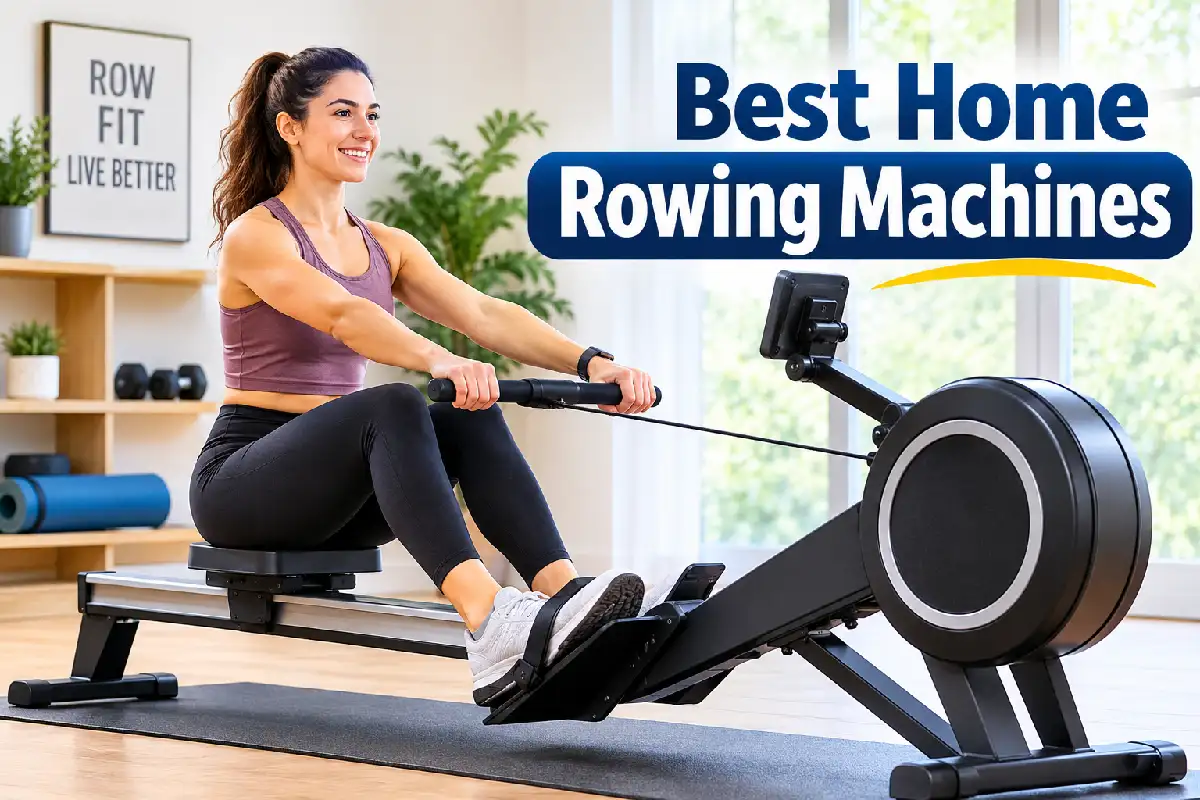



The best home rowing machines will help you achieve your fitness goals. Whether you want to improve your cardiovascular fitness, build muscle, lose weight or simply make it easier during your workout, a rowing machine will help.
Rowing machines are a great choice as they offer a full body workout. They will help work several major muscles and offer you a controlled workout. You can change the intensity of your workout.
However, there are several factors which you need to consider. This includes resistance type, quality, comfort, space, noise and tracking.
In this guide we will review the best rowing machines for home. We will explain the differences, and what will be the best option for your budget, space and training.
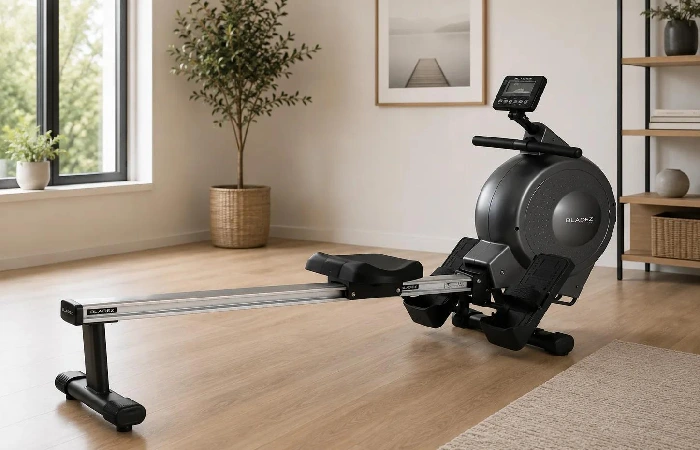
Table of Contents
What Is a Home Rowing Machine?
A home rowing machine mimics the action of rowing a boat. You will have a sliding seat, footplate, handle and resistance. During your workout you will push with your legs, move your body and pull the handle towards you. Then reverse the movement.
Modern rowing machines will offer different types of resistance. Including air, magnetic, water and hydraulic.
You can use a rowing machine no matter your fitness. They can be controlled to give you an optimal training session.
10 Best Home Rowing Machines
Depending on how you plan to use your rowing machine you want to find the best option. Some offer high performance, durable machines. Whilst others offer an affordable, quiet and interactive option.
Below are the 10 different rowing machines.
Best Overall – Air Resistance
Air resistance machines would be the best option if you want an interactive workout.
They have fly wheels meaning the faster and harder you pull the handle, the more resistance. They are popular with fitness enthusiasts as they offer a consistent workout, interval training and tracking.
Key Features:
- Smooth fly wheel
- Adjustable Damper
- Monitor
- Durable
- Comfortable Seat & Handle
- Easy to Maintain
Best for: Advanced rowers, home gyms and to improve performance.
Best Magnetic
Magnetic rowing machines use magnets for resistance. Many will offer adjustable resistance.
The benefit of using these machines is they are usually quiet.
Perfect if you live in an apartment.
Key Features:
- Multiple Resistance Options
- Smooth Seat
- Quiet
- Compact
- Monitor
- Adjustable Footplate
Best for: Beginners, Apartment & Quiet Cardio.
Best Water
These offer resistance through paddles in the water tank. When rowing you will hear a noise as if displacing the water. The harder and faster you pull the handle, the more resistance. Many love these as they offer a smooth workout.
Some have wooden frames which can complement your home gym.
Key Features:
- Durable Tank
- No Leaks
- Comfortable Seat
- Stable Frame
- Easy to Clean Water
- Clear Tracking
Best For: Those who love a water like workout and want an aesthetic home gym.
Best Budget
If you are new to indoor rowing, a budget machine will be great for you. You don’t need a high end, touch screen machine with advanced features to get a great workout. Just look for a simple resistance, stable, comfortable footplate and easy to read screen.
Before buying check the weight capacity and if it’s suitable for your height.
Key Features:
- Affordable
- Simple Resistance
- Simple Monitor
- Stable
- Easy to Build
- Suitable for your Weight
Best For: Beginners & Easy to get into a routine.
Best Compact
If you live in an apartment or have limited space to workout, a compact rowing machine may be the best option for you. Some are foldable, some are segmented or upright.
Before buying check the size when folded and unfolded. They can sometimes be misleading in the pictures.
Key Features:
- Foldable/Upright
- Lightweight
- Wheels
- Easy to Build
- Locking System
- Long Rail
Best For: Small Apartments, Shared Homes & Flexible Storage.
Best Smart
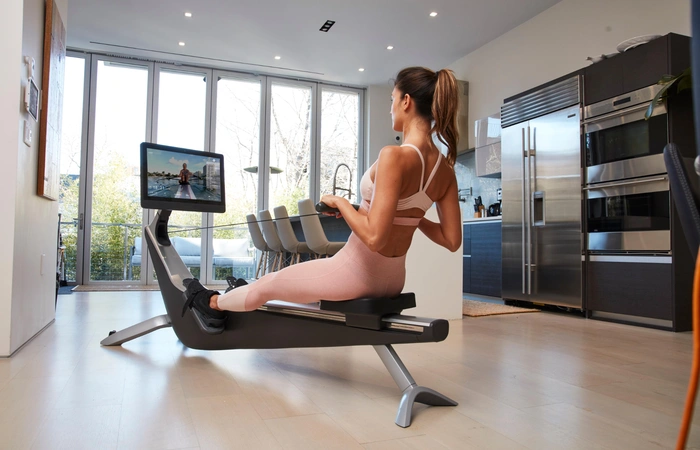
Smart rowing machines can connect to apps or have screens to make your workout interactive. Depending on the model you can use them for classes, stats, training and virtual challenges.
They are great for those who love structure or need a bit of extra motivation. However, check if there is a subscription fee. Some features may be locked.
Key Features:
- Bluetooth
- Interactive
- Easy to Read Screen
- Tracking
- App Compatibility
- Subscription
Best for: Those who love interactive workouts.
Best Foldable
Foldable rowing machines can save you space. They can be useful if you have a multi purpose room.
However, make sure they are still stable. Check they have a locking system, strong frame and feel comfortable when working out.
Key Features:
- Locking System
- Strong Frame
- Stable
- Easy to Transport
- Comfortable Seat
- Practical Size
Best For: Those requiring storage.
Best High End
High end rowing machines tend to have durable frames, advanced tracking, ergonomic designs and extra features. Some have large screens, interactive coaching, adjustable resistance and connectivity.
However, if you are simply looking for a basic cardio workout then a reliable mid range machine will give you everything you need.
Key Features:
- High Quality
- Consistent Resistance
- Advanced Tracking
- Comfortable Seat & Handle
- Long Lasting Support
- Warranty
Best for: Regular Users & Advanced Home Gym Equipment.
Best Hydraulic
Hydraulic rowing machines use cylinders. Some have separate arms to allow you to row in different positions. They tend to be smaller than traditional rail machines. However, they can be very different to air and water.
Before buying check the quality of the cylinders and resistance.
Key Features:
- Adjustable Resistance
- Comfortable Handles
- Stable Base
- Compact
- Easy to Read Screen
Best For: Basic Home Gym Equipment on a Budget.
Best Full Body Workout at Home
If you are looking for a good cardio workout and to build muscular endurance then look for a long rail and smooth resistance. A good rowing machine will allow you to fully extend your legs with controlled movements and consistent resistance. Choose a rowing machine that will suit your height, weight and intensity.
Key Features:
- Full Range of Movement
- Adjustable Resistance
- Strong Frame
- Comfortable Footplate
- Smooth Seat
- Useful Tracking
Best For: Good Cardio & Muscular Endurance.
Best Resistance Type – Air, Magnetic or Water
One of the most important things to consider is what resistance you would prefer. Below is a table showing the benefits and negatives of each type.
| Feature | Air | Magnetic | Water |
|---|---|---|---|
| Resistance | Fly Wheel | Magnets | Water Paddles |
| Noise | Medium-High | Usually Low | Medium |
| Resistance Adjustable | Effort & Damper | Adjustable (Manual/Electronic) | Effort Based |
| Maintenance | Occasionally | Little (usually) | Maintenance Required (Water Tank) |
| Feel | Dynamic | Controlled | Smooth |
| Best for | Performance | Quiet Home Workouts | Natural |
Air Resistance
Air resistance rowing machines are popular with those looking for a performance based workout. The harder you pull, the faster the fly wheel will turn giving you an interactive workout. However, they can be quite noisy.
Magnetic Resistance
Magnetic rowing machines are usually quiet and offer adjustable resistance. They can be a great option for beginners and those living in an apartment. However, they may not give the same feel as air and water.
Water Resistance
Water rowing machines use a water tank with spinning paddles. They can give a unique feel with smooth movement. However, you will have to do some maintenance to the water tank and can be more expensive.
Which One Should I Choose?
- Air – Performance Training
- Magnetic – Quiet Workout
- Water – Smooth Water Like Feel
There is no best resistance type.
Benefits of Using a Rowing Machine at Home
Regular use of a rowing machine with correct technique can offer many benefits.
Improved Cardiovascular Fitness
As a form of aerobic activity, rowing will get your heart and breathing racing. Doing this regularly can help improve your cardiovascular endurance. Adults should aim to do 150 minutes of moderate intensity aerobic activity per week, or 75 minutes of vigorous intensity aerobic activity. They should also do muscle strengthening activities on at least 2 days.
By doing indoor rowing you can help achieve your weekly target depending on how intense your workout is.
Working Multiple Muscles
Rowing uses coordinated movements using multiple parts of your body. The main muscles used are:
- Quads
- Hamstrings
- Glutes
- Calves
- Upper Back
- Latissimus Dorsi
- Biceps
- Core
You will get most power from your legs however your back and arms will help.
Low Impact
Rowing is a low impact activity as your feet are always on the foot plates and you are moving along the rail. Unlike running you aren’t landing on your feet repeatedly. This can be a great option for those who like controlled movements. However, it may not be suitable for everyone with joint issues or injuries.
Weight Management
Rowing can help increase your energy expenditure and create a calorie deficit. This will depend on:
- Your weight
- How long you workout for
- How intense your workout is
- Your fitness level
- How efficiently you move
To help manage your weight in a sustainable way combine your workouts with healthy balanced meals, sufficient sleep and healthy lifestyle habits.
5) Helps Improve Muscular Endurance
Although all movements will work your glutes, shoulders and arms, regular use of a rowing machine will help improve muscular endurance. If you are looking to improve your muscle mass, use some resistance machines.
6) Easy to Use
Having a rowing machine at home will mean you can easily fit some exercise in. Whether it be a short workout in the morning, lunch or evening. This will help encourage you to use the rowing machine regularly.
Things to Consider When Choosing the Best Rowing Machine
Consider:
1) Resistance Type
Air, magnetic, water or hydraulic. Depending on your fitness goals, whether you want it to be noisy or not and your budget.
2) Size
Work out how much space you have. Decide what size you want. If you don’t have a lot of space look for a foldable rowing machine or upright.
3) Weight
Always check the weight capacity!
4) Comfortable
Look for a comfortable rowing machine. Good foot rests and a great handle. Make sure you can easily use it with your feet in the foot rests.
5) Screen
Look for a rowing machine with a good screen. You should be able to see:
- Time
- Distance
- Strokes Per Min
- Calories
- Pace
And your workout. More advanced ones will have bluetooth and lots of information.
6) Noisy?
If you want to use your rowing machine early in the morning or in a shared building this can be an issue. Magnetic will be less noisy than air resistance. However, depending on how well maintained and high quality it is.
7) Warranty
Check what warranty you have. Frame, resistance and electrical. Any spare parts?
8) Cost
How much will it cost to deliver, assemble, maintain and subscription? Although it may be tempting to go for the cheaper options, they may not be the best value for money. Spare parts may be hard to find.
How to Get The Most Out Of Your Rowing Machine
To get the most out of your rowing machine ensure you are using the right techniques. There are 4 key points to remember.
1) Catch
Sit on the seat and put your feet in the foot rests. Bend your knees and lean forwards so your shins are almost vertical. Arms should be straight and shoulders relaxed. Neutral spine.
2) Drive
Drive with your legs. Once your legs are almost straight lean back with your hips. Pull the handle to your lower ribs.
Legs Body Arms!
3) Finish
Legs should be straight. Body should be leaning back slightly. Handle should be close to your lower chest/top of stomach. Wrist should be straight. Don’t pull too hard.
4) Recovery
Straighten your arms. Lean forward with your hips. Bend your knees and glide back to your catch. Try to take your time.
Pro Tip: Legs Body Arms Arms Body Legs.
Beginner Rowing Machine Routine
When starting out keep your workouts short. Below is a simple routine:
| Week | Length | Frequency |
|---|---|---|
| Week 1 | 10 mins | 2-3 Days |
| Week 2 | 12-15 mins | 3 Days |
| Week 3 | 15-20 mins | 3 Days |
| Week 4 | 20-25 mins | 3-4 Days |
15 Min Routine
Warm Up (3 mins)
Light intensity.
Main (9 mins)
Alternate:
- 2 mins light intensity.
- 1 min harder intensity.
Repeat 3 times.
Cool Down (3 mins)
Do a light intensity row to get your breathing back to normal. This can be altered depending on your fitness. Don’t try to use high resistance.
Common Mistakes
No matter how good your rowing machine is if you are not using the correct techniques you won’t get anything out of it. Avoid:
1) Using your arms
Make sure you are driving with your legs. Using your arms is not as efficient.
2) Rounded Back
Keep your back neutral.
3) Quick Recovery
Try to avoid quick recovery.
4) High Resistance
Avoid high resistance. Start with low resistance to focus on your technique.
5) Feet not secured
Make sure your feet are secured but not too tight.
6) No Warm Up
Start with a few minutes of light rowing.
How Much Should I Spend?
Depending on the resistance, quality, screen and extra features there are generally 4 categories:
Budget
Low resistance. Simple screen.
Mid Range
More stable. Range of resistances.
Upper Mid Range
Good build. Good tracking.
Premium
Advanced screen, connectivity and premium materials.
The price will depend on where you are in the world and who you’re buying from. Always look into what rowing machines are available in your area. This will affect how much the warranty and delivery will cost. As a beginner you can go for a budget or mid range machine. If you plan on using your rowing machine regularly or are an athlete looking to perform it may be worth investing in a durable machine.
Caring For Your Rower
Whilst there is nothing complicated to maintaining a rowing machine, it is always a good idea to take a few minutes to care for it after every session. Over time dust, sweat and general use can cause wear and tear to the components.
Depending on your rower, you can:
Clean
After every use wipe down the handle, foot plates and seat. These are the most likely parts to collect sweat.
All you really need is a soft cloth and a suitable cleaner. Always check the manufacturers guidelines first to ensure that the product won’t cause damage to the frame or screen due to harsh chemicals.
Seat and Rail
Ensure the seat is running smoothly over the rail.
If this is causing any issues, ensure that there isn’t any dust or dirt building up and that the rail has been cleaned. Ensure you have read the manufacturer’s guidelines first to ensure that any lubrication/adjustment is done correctly.
Handle, Chain, Strap or Cable
As these parts will be used constantly, it is a good idea to check regularly.
Check that any fittings aren’t loose and that there isn’t any fraying on the straps. If there are any strange noises whilst using the machine, stop using the machine until the issue has been investigated. Any damaged components should be addressed as per the manufacturer’s guidelines.
Water Tank (applicable)
If you have a water rower, you will need to take extra care with the water. Check the water and follow the manufacturer’s guidelines.
Also ensure there isn’t any leaks around the tank. Only use the recommended products for water treatment.
Secure
If you have a folding rower or one that can be stood up, ensure it is securely locked. This will prevent the machine from becoming unstable.
Ensure wherever you are storing it, it is in a dry area. Avoid putting any heavy items on top.
If your unsure how to fold/store your specific model, refer back to the manufacturers guidelines.
Increasing Your Session
When starting off using a rowing machine, keeping it simple is perfectly fine. Get used to the flow and find a steady pace.
After a while you might find your usual sessions are becoming easier to complete. At this point you could try increasing your session slightly. You could increase the amount of time you are rowing or include a few short bursts of high intensity.
There is no need to do the same every session. One session could be a steady and comfortable pace and another could include short bursts. This will prevent the sessions becoming monotonous.
If you are new to indoor rowing, take your time to get used to it. Don’t push yourself too hard straight away. Remember to rest and recover
You could include other activities such as strength training or light mobility work.
Most importantly, don’t feel as if you need to push yourself every session. Listen to your body and make changes at a pace that works for your fitness.
FAQ’S
1) What Is The Best Rowing Machine To Use at home?
It depends on your needs. If you want a high performance machine go for air resistance. If you want something quiet go for magnetic resistance.
2) Are Rowing Machines Good for beginners?
Yes! Keep your workouts short and build up. Make sure you are using the correct techniques.
3) Are Rowing Machines Better Than Treadmills?
Both will give you a cardio workout however they are very different. Treadmills will focus on walking, jogging and running. Rowing machines will target your upper and lower body. It depends on your fitness goals and what you prefer.
4) Can Rowing Machines Help Me Lose Weight?
Yes! It will help you burn more calories. Combined with a healthy diet and regular exercise you will lose weight. It depends on your energy balance.
5) How Long Should I row?
As a beginner aim to row for 10-15 mins. As you progress you can increase the amount of time depending on your fitness, recovery and training goals.
6) Are Magnetic Rowing Machines quiet?
Generally yes. They will be quieter than air resistance. However they can still be quite noisy with the seat and rail.
7) Are Water Rowing Machines Worth It?
They can be. If you like the smooth resistance and realistic rowing sounds. Compare the price, storage and maintenance.
8) Can I Row Every Day?
Some can! As a beginner make sure you have some recovery. Vary the intensity.
9) What Should I Look For In a Cheap Rowing Machine?
A strong build, smooth adjustable resistance, comfortable, correct weight capacity and good warranty. Don’t just go for the cheapest.
10) Does a Rowing Machine Work Your Whole Body?
Yes! It will work many large muscles including your legs, back, arms and core. It will give a co-ordinated full body workout however will not replace a full strength programme.
Final Thoughts
Knowing your fitness goals, space, budget and preferred resistance you can find the best rowing machines for home. Air resistance will give you a high performance, magnetic will give you a practical and quiet option and water will give you a unique experience. Budget and small machines can be useful For Beginners. When choosing your Rowing Machine
Consider: – Quality – Weight – Comfortable – Resistance – Warranty – Storage
Most importantly make sure you will be using your rowing machine regularly. Focus on techniques, having a balanced exercise routine and eating well will help you get the most out of your home workouts.
Saba Mirza is a Health, Wellness & Lifestyle Writer at Being Healthy Life with 3+ years of writing experience. She creates clear, informative, and reader-focused content covering health, wellness, nutrition, fitness, natural health, and lifestyle topics.
View Profile →
Sameena Begum is a health, technology, and digital content reviewer who reviews selected articles to help ensure that information is presented clearly, accurately, and responsibly.
View Profile →
Dr. Syed Imtiaz is a qualified medical professional with MBBS and MD qualifications and 5+ years of experience. As a Medical Reviewer at Being Healthy Life, he reviews selected health and wellness content for medical accuracy, clarity, appropriate context, and responsible presentation.
View Profile →