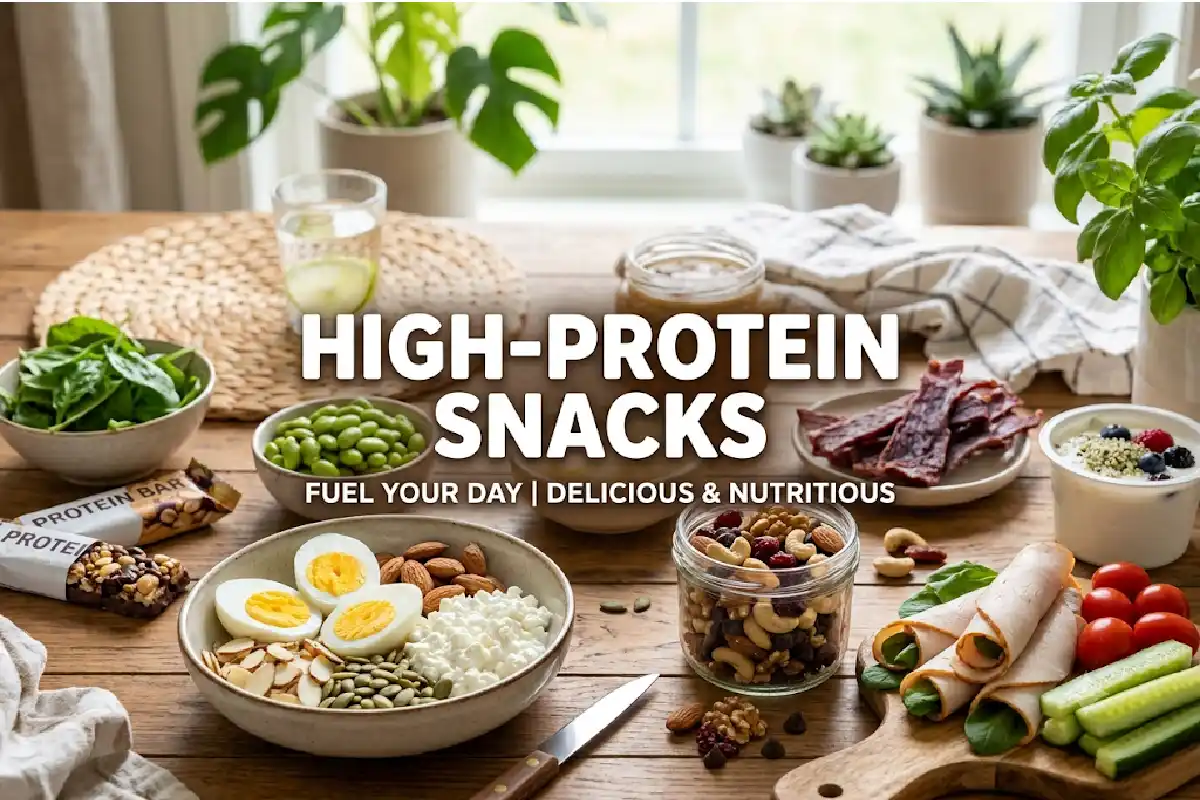



High Protein Snacks are a practical way to add more protein to your daily diet without preparing another full meal. From Greek yogurt and boiled eggs to roasted chickpeas and peanut butter, plenty of delicious options can fit different lifestyles and budgets.
Adding protein can be done by adding some high protein snacks. Protein is important to help keep and repair our muscles and helps our bodies with a variety of important functions. High protein foods as snacks will help you feel fuller for longer.
The best thing is that you don’t have to buy expensive protein bars or protein supplements. There are lots of healthy snacks you can make using affordable ingredients such as boiled eggs, roasted chana, paneer, greek yogurt, peanuts, milk and lentils.
Whether you’re looking to add muscle, lose weight or just eat healthy, there are lots of options.
Table of Contents
Why should I eat high protein snacks?
Whilst most people eat protein at mealtimes, you can actually eat a lot of protein during your snacking times.
Swap your biscuit with some roasted chana or plain yoghurt and eat a piece of fruit rather than a sweet desert. This will help ensure that you are eating more healthy diet.
Some reasons you should choose high protein snacks are:
Muscles – Proteins are made up of amino acids that help you build and maintain muscle. If you are regularly exercising and/or doing strength training then making sure you have enough protein is important.
Satiety – Eating protein can help you feel full between meals. If you pair it with high fibre foods such as fruits, vegetables and wholegrains then you will feel even fuller.
Nutrients – Nuts, lentils, egg and dairy contain more than just protein so can give you extra nutrients such as vitamins, minerals, fibre or healthy fats.
Time-saving – Having a few easy to eat snacks in your fridge or kitchen can help you.
Don’t go overboard – Try to get the correct amount of protein in your balanced diet.
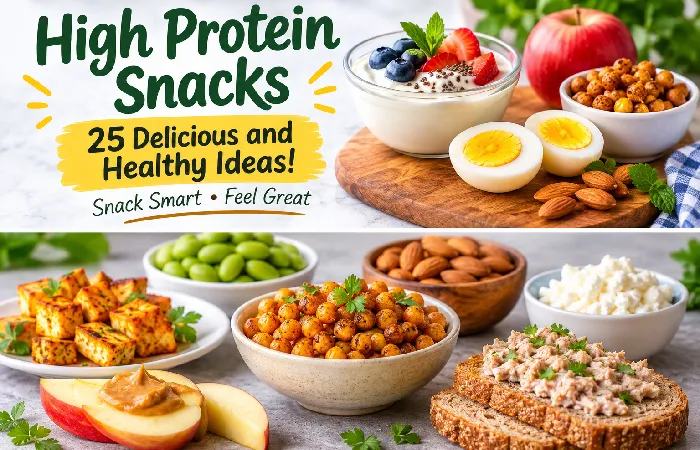
25 High Protein Snack Ideas
Everyone has different preferences when it comes to snacks. Some will want a sweet snack, some will want a crisp snack and others may want a savoury snack. Below are some suggestions that have a bit of everything!
These are rough estimates and can vary based on brand, ingredients and cooking methods.
-
Greek Yogurt + Fresh Fruit
This is a great option if you like something creamy and slightly sweet. Greek Yogurt is usually high in proteins as it has been strained. A serving size of around 170g will give you around 15-18g of protein. (Depending on brand). Add some strawberries, banana slices or blueberries. You can also add some almonds or chia seeds.
Try to always choose plain Greek Yogurt to reduce added sugars.
-
Boiled Eggs.
Sometimes the simplest snacks are the best! This is a quick and easy snack packed full of quality protein. Each large egg contains around 6g of protein. Sprinkle some black pepper on top or have with cucumber slices. You can also make a quick egg salad using boiled eggs and plain yogurt. Boil up a few eggs and keep in the fridge.
-
Roasted Chana
This is one of the best Indian snacks to add to your routine. It is crunchy, cheap and easy to take with you. This is a good source of protein depending on how much you eat and how it has been cooked. Half a cup of cooked chickpeas will provide you with 7g of protein however if it has been dry roasted then it will have a different weight and protein content. Check the packet for how much you should be eating. Eaten on its own or with chopped onions, tomatoes, coriander and lemon juice. Great choice if you prefer something savoury over packaged chips.
-
Paneer Tikka
This is a popular source of protein in an Indian vegetarian diet. Cube the paneer and mix with some curd, turmeric, chilli powder, ginger and garam masala. Cook using the grill or oven until golden. Depending on the variety of paneer you can get between 15-20g of protein in 100g of paneer. Serve with cucumber slices or mint chutney.
-
Peanut Butter and Apple
If you like sweet snacks then this is a great option. The apple will give you fibre whilst the peanut butter will give you protein and unsaturated fats. Two tablespoons of peanut butter will usually give you around 7-8g of protein. This will depend on the brand. Just add a little bit of peanut butter to some apple slices. You won’t need much to enjoy this.
-
Almonds
Almonds are easy to take with you and require no cooking. One 28g serve will give you approximately 6g of protein. They are also rich in vitamin E, magnesium, fibre and unsaturated fats. Keep a small serve to have in your bag or on your desk. They are fairly calorie dense, so you won’t need much!
-
Edamame
Edamame are young soya beans which are often eaten as a snack. They are a great plant-based protein. Half a cup of shelled cooked edamame will provide roughly 9g of protein. Simply steam or boil the edamame and add a small amount of salt, black pepper and lemon juice. You can also add to salads. Soya products like these provide all nine essential amino acids.
-
Tuna & Wholegrain Bread
If you eat fish then tuna is a great option to include some protein. Simply mash up some tinned tuna, add a little plain yogurt, lemon juice and black pepper. Spread onto wholegrain bread or have with some crackers. 75g may provide you with roughly 17-20g of protein depending on the type of tuna. Remember different types of tuna will have varying levels of mercury. Be mindful of what type of tuna you are purchasing and follow guidelines on how much fish to eat, especially if you are pregnant or have young children.
-
Pumpkin Seeds
Pumpkin seeds are a great easy snack providing you with protein, magnesium and zinc.28g will provide you with roughly 8-9g of protein. Simply roast the seeds and keep a small container in your kitchen. You can also add to yogurts, porridges and salads. If you are looking to limit your salt intake then choose unsalted.
-
Cottage Cheese
Another dairy based snack is cottage cheese which can give a good amount of protein. Around half a cup can give you roughly 12-14g of protein. This can vary depending on the brand and type. Add some cucumber, tomato and black pepper for a savoury option. Or add pineapple chunks or fresh berries for something sweet. Check the nutrition information as this can vary.
-
Hummus, Carrot & Cucumber
Hummus is mostly made from chickpeas, tahini, lemon juice and other ingredients. It has a creamy texture and goes really well with fresh vegetables. Around 4-5g of protein can be provided in a quarter cup. This can vary depending on the recipe. Have with some carrot sticks, cucumber slices or wholegrain crackers. Whilst this isn’t the highest in protein it is a great source of fibre and healthy fats.
-
Milk
Sometimes all you need is a glass of milk. Cow’s milk will provide around 8g of protein per 240ml. It is also a great source of calcium and other nutrients. Drink cold, warm or add a banana. If you are looking for a plant-based option then you could go for unsweetened enriched soya milk. Check the label as the protein can vary.
-
Chia Pudding
If you like to plan ahead then this is a great option. Simply mix 2 tablespoons of chia seeds with some milk or enriched soya milk and leave to set in the fridge for a few hours or overnight. 2 tablespoons of chia seeds will provide around 4g of protein. The milk/soya milk will add extra. Add some fresh fruit, cinnamon or a few chopped nuts.
-
Chicken Bites
If you eat meat then cooked chicken breast is a good high protein option. 85g of cooked chicken breast can provide you with around 25-27g of protein. Dice up the chicken and season with garlic, black pepper, lemon juice and herbs. Either grill or bake until fully cooked. Make a couple of portions ahead of time. Once cooked store in the fridge and reheat safely.
-
Roasted Soy Nuts
If you like crunchy snacks then these are a great option. 28g can provide you with around 12-13g of protein depending on the product. They are great for vegetarians and vegans. If you are looking to limit your sodium intake then pick lightly salted. Be mindful of the portion sizes as they can vary in salt and calories.
-
Protein Smoothie
This is a great option to make yourself if you need something quick or as a convenient snack post-exercise.
Blend together:
- 1 cup milk
- Half a banana
- 1 tablespoon peanut butter
- A pinch of unsweetened cocoa powder
This can provide you with around 12-16g of protein. This can vary depending on the ingredients and portion sizes. You can use unsweetened soy milk instead of cow’s milk. Add some plain greek yogurt if you would like a thicker texture.
-
Sprouted Moong Salad
Sprouted moong is something you will find in many Indian kitchens. It can be used to make a filling snack using simple ingredients. Cooked sprouted moong, chopped tomatoes, cucumber, onions, coriander, lemon juice and pepper. One cup of cooked sprouts will contain around 7-8g of protein. Raw sprouts can become contaminated with harmful bacteria. It’s important to cook them fully – if you have young children, the elderly, pregnant ladies or someone with a weak immune system then it’s vital to cook them fully. Click here to find out more about how to handle sprouts safely.
-
Tofu Cubes
Tofu is made from soya beans and is a great alternative to paneer. Great for those on a vegan diet. 100g of firm tofu can give you around 10-15g of protein depending on the type. Dice up the tofu and season with garlic, black pepper and a little soy sauce. Bake or shallow fry until lightly golden. You can also add to salads or vegetable wraps.
-
Roasted Peanuts
These are a cheap option which can be found in most Indian grocery stores. 28g will provide around 7g of protein. You can enjoy them plain or add some diced onion, tomato, coriander and lemon juice for a quick savoury snack. If you can choose unsalted. They are high in calories so keep portion sizes small.
-
Chicken Rolls
Use any left cooked chicken from your lunch. Place thin slices of cooked chicken in wholegrain wrap/lettuce. Then add cucumber, bell peppers and a bit of yogurt based sauce. Depending on how much chicken you use, this could provide roughly 18-23g of protein in a 60-75g serving. This is an easy way to use up your leftovers.
-
Cheese & Wholegrain Crackers
A great portable snack. About 7g of protein can be found in a 30g portion of cheddar cheese. Pair with a moderate portion of wholegrain crackers and some tomato/cucumber. Cheese can be high in saturated fats and salt so keep portions small.
-
Moong Dal Chilla
Moong dal chilla is a traditional Indian snack which can help you increase your intake of plant-based proteins. Soak green gram and blend to create a smooth batter. Add in ginger, cumin, coriander and favourite spices. Cook small chillas using a little oil in a non-stick pan. Depending on the amount of dal and size of chilla, this could provide around 8-12g of protein. Serve with plain curd or mint chutney.
-
Quinoa Salad
Quinoa is often used as an alternative to rice and grains. It is a good source of protein and fibre. One cup of cooked quinoa provides around 8g of protein. Mix with cucumber, tomato, lemon juice and fresh herbs. Add some chickpeas if you want to increase your protein intake. Cook a small amount to have ready to go.
-
Oats, Milk & Nuts
Oats aren’t often considered as a protein rich food, however combining with some other ingredients can create a high protein snack. Cook some oats with milk and add some almonds, peanut butter or chia seeds. Depending on how much you use and what you add, this could provide around 12-18g of protein. This is an easy warming snack. Especially if you want something filling in the morning or evening.
-
Energy Balls (Homemade)
These are a great alternative to packaged sweets if you often crave something sweet in the afternoon. Mix together rolled oats, peanut butter, chia seeds, chopped nuts and a little honey. Form into small balls and place in the fridge to harden. Depending on the ingredients and size of the balls, this will provide varying amounts of protein. Cook a small amount and store in the fridge. These are easy to take with you.
Top High-Protein Snacks – Protein Comparison
Below is a quick idea of how much protein some popular snack ingredients provide:
Snack Protein (approx)
Greek Yogurt (170g) 15-18g
Boiled Egg (Large 1) 6g
Cooked Chickpeas (1/2 cup) 7g
Paneer (100g) 15-20g
Almonds (28g) 6g
Cooked Edamame (1/2 cup) 9g
Tuna (75g) 17-20g
Pumpkin Seeds (28g) 8-9g
Cow’s Milk (240ml) 8g
Firm Tofu (100g) 10-15g
Roasted Peanuts (28g) 7g
Cooked Chicken Breast (85g) 25-27g
These are rough estimates. The amount of protein will depend on the variety of the food, how it is prepared and how much you are having. Always look at the nutrition label of the packaged item.
High-Protein Snacks Based On Your Diet
Everyone has different preferences when it comes to food. Some people like to eat meat, others avoid all animal products. Some people want something reasonable to eat that they can cook.
Here are a few ideas for choosing snacks based on your diet:
Vegetarian
If you eat dairy but not meat or fish try:
Paneer tikka
Greek yogurt with fruit
Cottage cheese with cucumber
Roasted chickpeas
Moong dal chilla
Milk & chia pudding
If you eat eggs then boiled eggs are a great option.
Vegan
Even though you’re avoiding all animal products, there are many variations of foods you can eat to get protein.
Some great options are:
Roasted soy nuts
Edamame
Tofu cubes
Hummus & vegetables
Roasted chickpeas
Peanut butter & fruit
Lentil salad
Chia pudding with Fortified soy milk
Tofu and Edamame are both soy based foods that are complete proteins containing all 9 essential amino acids. Eating a variety of plant based proteins throughout the day will give you all the amino acids you require.
Cheap Options:
You don’t have to spend too much to eat healthily.
Many Indian homes will have cheap options such as chana, peanuts, eggs, lentils, milk and homemade moong dal chilla.
Buying the basics and making your own Protein Snacks can actually be cheaper than buying Protein Snacks/snack bars.
Can Protein Snacks Help You Lose Weight?
Protein Snacks can be a great way to help you Lose Weight. Protein can help you to feel fuller between meals.
Instead of a biscuit have some roasted chana or a boiled egg with cucumber or plain yogurt and fruit.
However, you won’t Lose Weight by just eating protein. How much you eat overall, what you eat, how active you are, how much sleep you get and your lifestyle will be a factor.
Some healthy foods can be high in calories. Nuts, peanut butter and cheese can all be part of a balanced diet but can be easy to over consume if you have large portions.
Don’t avoid these foods, just enjoy them in moderation.
High Protein Snacks after Exercise
After exercising your body will need some nutrition. Protein will help your muscles repair as it provides amino acids. Carbohydrates will help you regain some energy.
You don’t have to spend much on protein shakes and supplements. Many everyday foods can provide protein.
Some easy combinations include:
Banana and milk
Greek yogurt and fruit
Paneer and wholegrain toast
Boiled eggs and bread
Tofu and vegetable wrap
Chicken and a little rice
The most important thing is to ensure you have enough protein throughout the day.
How much protein should I be eating?
There are many factors to consider when deciding how much protein you should be eating. This depends on your weight, age, activity levels and health.
Generally healthy adults will aim to have around 0.8g per kg of body weight.
For example:
Weight Protein (approx.)
50kg 40g
55kg 44g
60kg 48g
65kg 52g
70kg 56g
75kg 60g
80kg 64g
These are general guidelines. Those who do intense exercise, those who are older, pregnant/breastfeeding and those with specific health conditions may require more or less.
If you have a kidney condition or any other condition relating to your protein metabolism consult a healthcare professional/registered dietician before increasing your protein.
Top tips for adding Protein Snacks
There are plenty of ways to easily increase your protein intake.
Make some protein based foods in advance. Boil your eggs, roast your chana, wash your vegetables or cook your lentils.
Don’t always rely on protein powders. There are many foods you can have for protein. Eggs, dairy, fish, poultry, beans, lentils and tofu.
Add variety. Add some fruit to your yoghurt, some hummus to your vegetables or some peanut butter to your wholegrain toast.
Check the labels. Often packaged snacks can be high in salt, added sugars and saturated fat. Try to compare.
Don’t over eat. Even healthy snacks can add calories. Try to have a portion size that works for you.
Have variety. This way you will get a variety of nutrients from different proteins.
FAQ
-
What are the easiest high Protein Snacks to make?
Eggs (boiled), Greek Yogurt, Chana (roasted), Peanuts, Milk and Paneer cubes are some of the easiest. Most can be made with little preparation.
-
What are high protein Indian snacks?
Chana (roasted), Moong Dal Chilla, Paneer Tikka, Sprouted Moong (cooked), Boiled eggs and Soy Nuts (roasted). Most can be made using ingredients found in an Indian kitchen.
-
What are good high protein vegetarian snacks?
Paneer, Greek Yogurt, Cottage Cheese, Tofu, Edamame, Lentils and Soy Nuts (roasted). If you eat eggs then boiled eggs are also a good option.
-
Can I eat protein rich snacks every day?
Most healthy adults can eat protein rich snacks every day. Try to have a variety.
-
Are protein bars a better option?
Not necessarily. They can be a good option if you are on the go or busy. How ever some can be high in added sugars. Making your own snacks such as Roasted Chickpeas, Yoghurt, Paneer and Boiled Eggs can be a healthy option.
-
What should I eat before my work out?
A snack containing some carbohydrates and protein can help. Try a banana with some yoghurt or wholegrain toast with some peanut butter. Eat an amount that is suitable for you.
-
Do I need protein powder to build muscle?
No. You don’t need protein powder to build muscle. You can obtain protein from eating foods such as eggs, dairy, fish, poultry, beans, lentils and tofu. Some may find supplements useful but your overall diet and exercise is important.
Final Thoughts
It doesn’t have to be difficult or expensive to find healthy snacks. There are plenty of high Protein Snacks you can make easily at home. Using simple ingredients such as eggs, yoghurt, paneer, chickpeas, peanuts, milk and lentils.
The best option for you will depend on what you like, what you can fit into your day and your nutritional needs. Try some of these and experiment to find snacks that will keep you feeling full between meals.
Snacks are only one part of a balanced diet. It is important to have a variety of healthy foods throughout the day.
Saba Mirza is a Health, Wellness & Lifestyle Writer at Being Healthy Life with 3+ years of writing experience. She creates clear, informative, and reader-focused content covering health, wellness, nutrition, fitness, natural health, and lifestyle topics.
View Profile →
Sameena Begum is a health, technology, and digital content reviewer who reviews selected articles to help ensure that information is presented clearly, accurately, and responsibly.
View Profile →
Dr. Syed Imtiaz is a qualified medical professional with MBBS and MD qualifications and 5+ years of experience. As a Medical Reviewer at Being Healthy Life, he reviews selected health and wellness content for medical accuracy, clarity, appropriate context, and responsible presentation.
View Profile →