
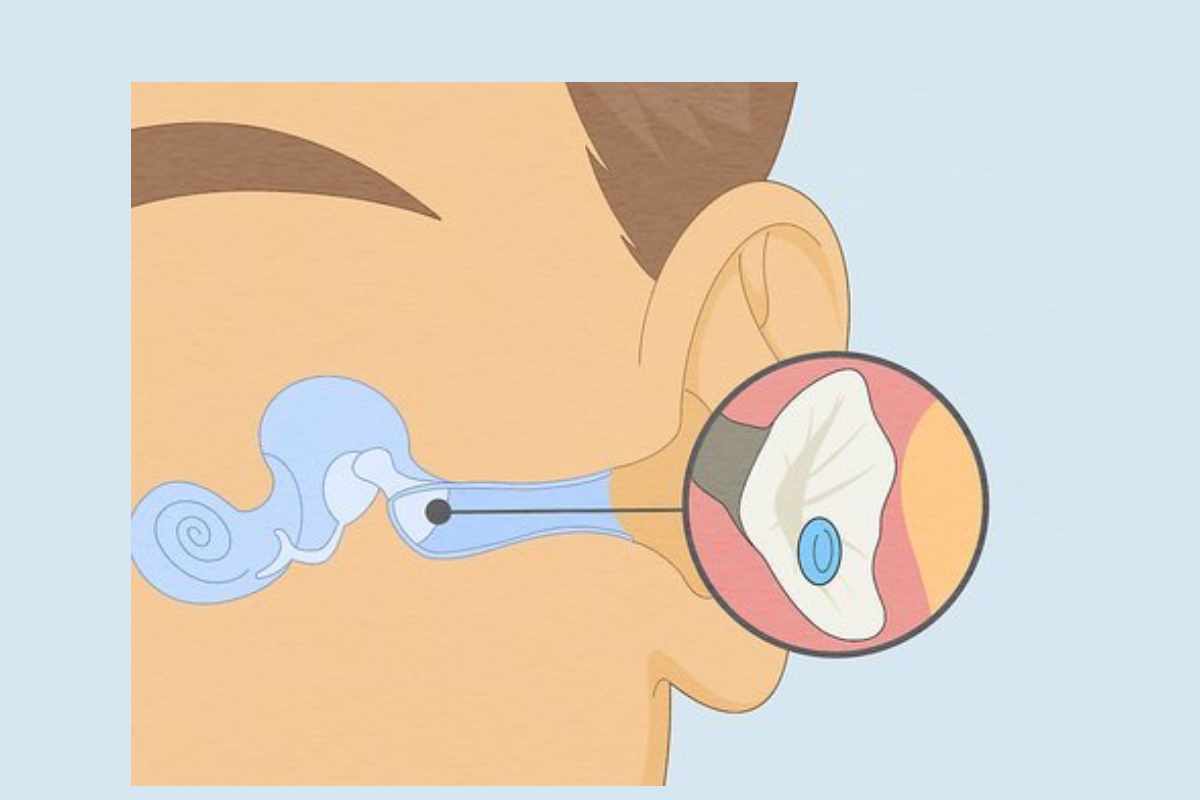
Excess fluid in the middle ear is a relatively common and extremely annoying problem in adults and children which can manifest as hearing loss, pressure or pain. Luckily, learning safe ways of relieving these symptoms with effective drainage of the middle ear fluid is the key to avoiding this discomfort.
This document is a detailed, medical approved, guide on safely draining middle ear fluid. Includes advice on when it is important to consult a doctor and what to do in the way of safely removing middle ear fluid from your home.
Table of Contents
What Is Middle Ear Fluid?
Middle ear fluid (OME), is fluid which builds up in the middle ear without any active infection; clinically, it is referred to as Otitis Media with effusion which simply states that fluid persists within the middle ear after an active infection is gone.
How It Happens
The Eustachian tube runs from the middle ear to the throat and works to balance air pressure and to allow any trapped fluid to drain away. Should this tube become blocked then fluid begins to build up, the most common cause of blockage is a cold flu or an allergic reaction.
Common Causes of Middle Ear Fluid
Upper respiratory infections-Colds orflu causesinflammation and blocking of the Eustachian tube.
Allergies-Cause swelling of the nasal passages and Eustachian tube.
Sinus infections-Raise air pressure in the head, and contribute to middle ear fluid.
Changes in air pressure-Such as in flying or diving, upset middle ear pressure balance.
Large adenoids (a common occurrence in children), these obstruct the entrance to the Eustachian tube.
Symptoms in the Middle Ear
Identification of early symptoms should encourage you to take action swiftly.
Typical Signs
-
- Muffled or reduced hearing
- Feeling of fullness in the ear
- Mild ear pain or discomfort
- Tinnitus (ringing in ears)
- Balance issues
The general symptoms experienced in children resemble the symptoms associated with the common cold, however other symptoms can be the presence of increased fussiness, hearing difficulties or speech delay.
Is It Safe to Drain Ear Fluid at Home?
Yes, providing the right method is used. Though it is not possible to actually “push” fluid from the ear at home these remedies encourage the body to do so itself and are a good way of passing time whilst waiting for the doctors, but the key to this is that nothing foreign can be placed into the ear.
Any middle ear fluid present for longer than 2 weeks with no improvement should always prompt you to consult with a medical professional.
Top Methods to Drain Fluid from Middle Ear at Home
-
- The Valsalva Maneuver
This is one of the most common and most suggested treatments.
Steps:
-
- Close your mouth
- Pinch your nose
- Take one long exhale, blow out through your nose.
This is used to open up your Eustachian tubes and the two pressure would equalise.
Do not blow too hard as it would blow your eardrum.
-
- Steam Inhalation
Steaming will help to thin mucus and reduce blockage.
Benefits:
-
- Reduces inflammation
- Opens nasal and ear passages
- Promotes drainage
-
- Warm Compress Therapy
Heat will promote blood circulation and facilitate the movement of fluids.
Steps:
-
- Put the towel in warm water
- Wring out the towel
- Lay on affected ear for ten minutes
Repeat 2 to 3 times per day.
-
- Gravity Drainage Technique
A simple, effective technique.
This may cause fluid to drain on its own using gravity.
-
- Nasal decongestants (short-term only)
These can either be spray or drops and they reduce swelling of nasal passages.
-
- Hydration and Fluids
Drink large quantities of fluid. This will reduce the thickness of mucus and so help it to drain.
-
- Chewing and Swallowing
Chew gum or yawn. This will open the Eustachian tubes.
How they work:
-
- Activates muscles that regulate ear pressure
- Encourages fluid movement
Home Remedies: Effectiveness Comparison
| Remedy | Effectiveness | Ease of Use | Safety |
| Valsalva maneuver | High | Easy | Safe if done gently |
| Steam inhalation | Moderate-High | Easy | Very safe |
| Warm compress | Moderate | Very easy | Very safe |
| Gravity method | Moderate | Easy | Safe |
| Decongestants | High (short-term) | Easy | Moderate |
Home Remedies for Middle Ear Fluid
-
- Garlic Oil Drops
Garlic is an antimicrobial.
-
- Warm and instill 1-2 drops (externally)
- It helps reduce the inflammation
-
- Apple Cider Vinegar Compress
-
- Mix with equal water
- Apply as a warm compress
-
- Saline Nasal Spray
Clears nasal congestion and supports drainage.
When Home Remedies Are Not Enough
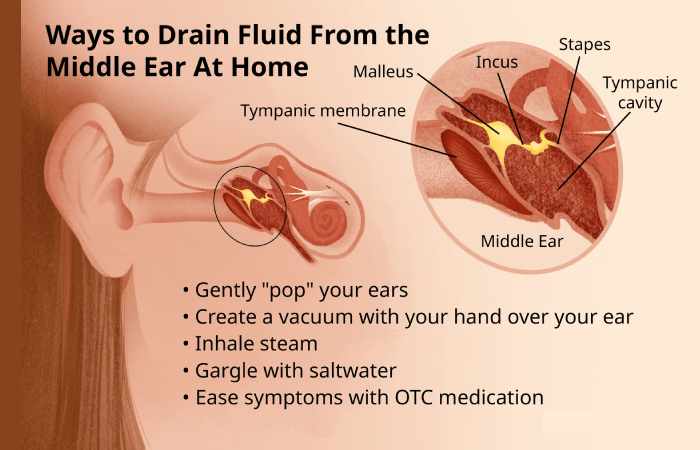
These treatments are helpful with minor cases, but there are some circumstances where a medical opinion is necessary.
Seek Medical Help If:
-
- Symptoms last more than 2 weeks
- Severe ear pain develops
- Fever is present
- Hearing loss worsens
- Fluid becomes infected
If treatment is delayed, Chronic otitis media could result in some complications.
Risks of Improper Home Treatment
Avoid unsafe methods such as:
-
- Using cotton swabs deep inside the ear
- Pouring unknown liquids into the ear canal
- Applying excessive pressure (webmd)
Potential Risks:
-
- Eardrum rupture
- Infection
- Hearing damage
How to Prevent Middle Ear Fluid
-
- Manage Allergies
Use antihistamines, or avoidance of triggers.
-
- Treat a cold promptly
Help to prevent blockage from forming in the first place.
-
- Good hygiene practices
Help to prevent infection.
-
- Avoid passive smoking
Secondhand smoke increases ear problems.
-
- Practice Pressure Equalization
Especially during flights or altitude changes.
Special Considerations for Children
Children have a tendency for fluid to accumulate in the middle ear more so than adults as they have shorter Eustachian tubes.
Tips for Parents:
-
- Encourage swallowing (water, chewing)
- Keep child upright during feeding
- Monitor hearing and speech
Myths vs Facts
| Myth | Reality |
| Ear fluid always means infection | Not always; fluid can exist without infection |
| You must drain it immediately | Often resolves naturally |
| Cotton swabs help remove fluid | Can push debris deeper and cause damage |
| Home remedies are unsafe | Safe if done correctly |

Best Daily Routine for Faster Recovery
Morning
-
- Steam inhalation
- Hydration
Afternoon
-
- Warm compress
- Chewing gum
Evening
-
- Valsalva maneuver
- Rest and hydration (mayoclinic)
Diet and Nutrition Support
Certain foods help reduce inflammation:
Recommended Foods
-
- Ginger
- Turmeric
- Citrus fruits
- Leafy greens
Avoid
-
- Excess sugar
- Dairy
FAQs
-
- How long does middle ear fluid last?
Typically 1–2 weeks, but may persist longer without treatment.
-
- Can fluid drain on its own?
Yes, in many cases it resolves naturally.
-
- Is it dangerous?
Usually not, but prolonged cases may affect hearing.
-
- Can I fly with ear fluid?
It’s not recommended due to pressure changes.
Conclusion
This issue of managing a fluid build-up in the middle ear, and it is something that can very often be dealt with effectively by the home. With effective home remedies like Valsalva, steaming the nasal passages, and a multitude of others you may find relief and naturally assist drainage of the mucus.
It is important however that you take care when trying to resolve this at home and do not over-treat. Look for signs of improvement and seek medical advice if your symptoms do not improve.
This kind of situation is one that with the correct actions, you can deal with successfully.