
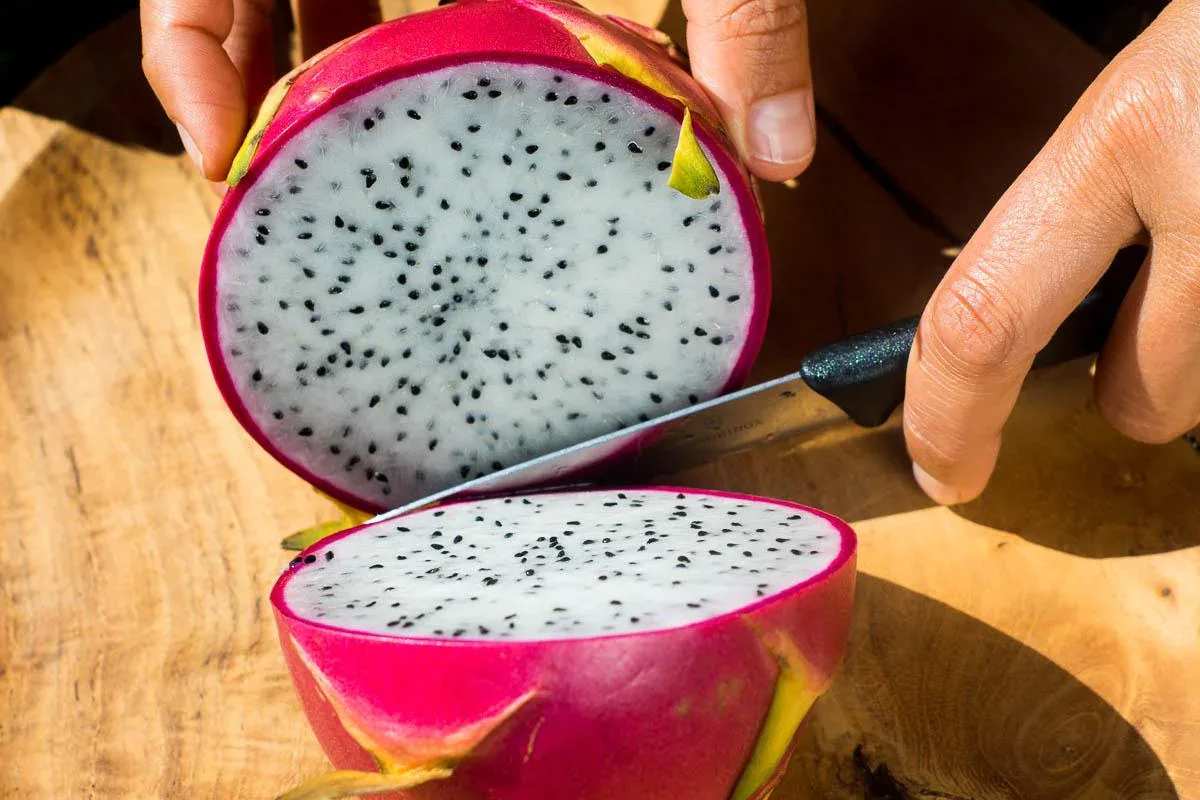
This fruit is the dragon fruit or pitaya or pitahaya, which has become a global superfruit in the last 10 years. Although it was a traditional ingredient in the Americas since ancient times, it has become a nutritional product of the modern era as seen in smoothie bowl shops in American coffee shops, and fruit jams in Asian stores. Its bright design, nutrient-focused health and exotic taste render it a common option among the health-conscious consumers as well as the culinary adventurers.
Let’s explore the full story behind this visually striking and nutrient-packed fruit.
Table of Contents
What Is Dragon Fruit?
The dragon fruit is the fruit of a variety of cactus species of the family Cactaceae. It is indigenous to southern Mexico and Central America but is currently cultivated commercially in the tropics and subtropics – southeast Asia, south America and some of the United States (such as Florida and Hawaii).
Common names:
- Dragon fruit
- Pitaya/pitahaya
- Strawberry pear (due to its taste and texture)
Typical varieties:
- The white flesh on red skin (preponderant)
- Red skin with red/pink flesh
- Yellow skin with white flesh
Although it has an exotic appearance with bright colors and scales, the flavor is usually characterised as slightly sweet and the taste resembles a pear or kiwi.
Nutritional Composition: What’s Inside Dragon Fruit?
Dragon fruit is a low-calorie fruit high in hydration, dietary fiber and micronutrients. Particular nutrient content is dependent on different varieties and sizes, but the following is a rough generalized list of a number of reliable sources (Verywell Fit):
Nutrition Table (per 100 g edible portion)
| Nutrient | Amount |
| Calories | ~57 kcal |
| Protein | ~0.4 g |
| Fat | ~0.14 g |
| Carbohydrates | 15 g |
| Dietary Fiber | 3–5 g |
| Vitamin C | ~5% DV |
| Iron | ~1% DV |
| Magnesium | ~2% DV |
| Antioxidants (betalains, flavonoids, phenolics) | Significant amounts |
DV = Daily Value
Information gathered on USDA, Healthline and WebMD.
Typical Nutrition Breakdown (per cup, ~170 g)
| Macronutrient | Amount |
| Calories | ~102 kcal |
| Carbohydrates | ~22 g |
| Fiber | ~5 g |
| Sugars | ~13 g |
| Protein | ~2 g |
| Magnesium | ~68 mg |
| Iron | ~1.26 mg |
| Vitamin C | ~4.25 mg |
There are also traces of healthy fats in this fruit, mostly of the edible seeds, such as the fatty acids of omega-3 and omega-6.
Health Benefits of Dragon Fruit
A lot of nutrition studies have been conducted on dragon fruit and it has been touted to have good results in various health dimensions. Even though there are some benefits that need further clinical research (at least in humans), the evidence is encouraging. (Healthline)
- Promotes Digestive Health
Dietary fiber as well as prebiotics present in dragon fruit promotes normal bowel movements and gut microbiota.
- Prebiotic fibers stimulate the growth of Lactobacillus and Bifidobacterium species – gut healthy bacteria.
- Helps aid in constipation and helps in regular digestion.
- Strengthens Immune Function
The presence of vitamin C and strong antioxidants (including flavonoids and betalains) prevents the oxidation of cells and even boosts the immune system.
- Heart Health Support
The soluble fiber and antioxidants may help lower LDL (“bad”) cholesterol levels and reduce oxidative stress — two major factors in heart disease risk. Additionally, seed fats may contribute beneficial fatty acids to cardiovascular health.
- Hydration and Electrolyte Support
The water content is high in dragon fruit and this keeps the body hydrated, particularly in hot climates or after a workout.
- Blood Sugar Regulation
Thanks to its fiber content and low glycemic load, dragon fruit may help slow glucose absorption and support better blood sugar balance — beneficial for people managing diabetes.
- Skin, Hair & Antioxidant Benefits
Vitamin C, antioxidants, and others contribute to the synthesis of collagen and they can potentially help prevent skin damage due to environmental factors. Antioxidants are also useful to neutralize the effect of free radicals leading to aging.
- Potential Anti-Inflammatory Effects
Laboratory and preclinical research indicates that the compounds of dragon fruit have the potential to decrease inflammation which could decrease chronic disease risk.
How to Select & Eat Dragon Fruit
Dragon fruit is easy to prepare once you know what to look for:
Choosing Ripe Dragon Fruit
- The skin must be healthy and flushed all over.
- The fruit must yield on pressing (not hard).
- Dark spots or super soft spots are to be avoided.
Preparing & Serving
Here’s a simple way to eat it:
- Wash the fruit.
- Slice it in half lengthwise.
- Scoop out the flesh with a spoon.
- Chop bite-sized pieces and serve fresh.
Dragon fruit, one can also use it in fruit salads, parfaits, as well as in frozen desserts and smoothies.
Potential Side Effects & Precautions

Although dragon fruit is generally safe for most people, a few considerations are important:
Possible Allergies
Others might have allergic reactions in the form of tingling, itch or swelling but these are few.
Digestive Sensitivity
High fiber and natural sugars may result in gas or slight diarrhea especially when people consume large quantities.
Medication Interactions
A healthcare provider should be consulted in case of taking any medications that control blood sugar levels since dragon fruit can have a minor effect on it.
Market Overview & Price Comparison (2025)
The popularity of dragon fruit does not only manifest in the health blogs and social feeds, but in the strength of market development in the world.
Global Market Size & Growth
- The global dragon fruit market was valued at approximately US$526.3 million in 2024.
- It is projected to have a CAGR of about 6.9 percent up to the year 2034 with the possibility of reaching up to US1 billion in 2034.
The growth is indicative of greater consumer taste in exotics, functional foods and organic nutrition.
Global Price Trends (Wholesale & Farmgate)
| Region / Source | Price Range (USD/kg) |
| Global wholesale average | $1.80 – $7.12 / kg |
| Farmgate (producer) global | $14.07 – $26.03 / kg |
| Argentina (reported) | ~$8.55 / kg |
| China wholesale | ~$0.96 – $1.32 / kg |
| Thailand wholesale | ~$0.78 – $1.35 / kg |
Data indicates variability based on regional supply conditions and quality grades.
India Retail Prices (Approximations)
| Purchase Format | Price Range |
| Retail (per kg) | ₹222 – ₹436 approx. |
| Online grocery (250 g fruit) | ₹112 |
| Local wholesale varies widely | ₹48 – ₹450 |
Prices depend on variety, seasonality, import status, and local supply.
Comparing Dragon Fruit to Other Fruits
Nutrition Snapshot
Ferried against some common fruits, dragon fruit has a unique position in the nutrition hierarchy:
| Fruit | Calories/100 g | Fiber | Vitamin C |
| Dragon Fruit | ~57 kcal | 3–5 g | Moderate (≈5% DV) |
| Apple | ~52 kcal | ~2.4 g | ~7% DV |
| Banana | ~89 kcal | ~2.6 g | ~8% DV |
| Orange | ~47 kcal | ~2.4 g | ~64% DV |
Dragon fruit typically offers more fiber per calorie and considerable antioxidant capacity, though citrus fruits can deliver higher vitamin C content per serving.
Ways to Incorporate Dragon Fruit Into Your Diet
The following are some of the ways to consume dragon fruit on a regular basis:
Recipe Ideas
- Dragon fruit smoothie (blend with banana, yogurt, and a splash of lime)
- Chia seed and honey fruit bowls
- Dragon fruit sorbet (freeze pulp + lime)
- Mint-Berry Salad topper
- Dragon fruit salsa with pineapple and lime
These alternatives strike a balance between taste, healthy living, and aesthetics – they are helpful in socializing and being shared on such a platform as Instagram and Pinterest.
Conclusion
Dragon fruit is not just a novel exotic fruit but a striking and nutritionally rich, and potentially health-promising, novel fruit. It is high in fiber, has antioxidant potential, has a hydration profile and has a moderate amount of calories, which makes it a worthy addition to a balanced diet. Digestive health, heart function, glowing skin or a refreshing snack, whatever you are after, dragon fruit will shine in a fruit market dominated by an overload of oranges, apples, and others.
Combined with high global market development and pricing differentials that hide its changing demand, dragon fruit will continue to play a major role in the healthy eating story over the next several years.